Air Conditioner Icing Up Causes
- Sep 02, 2021
- Buying Guides
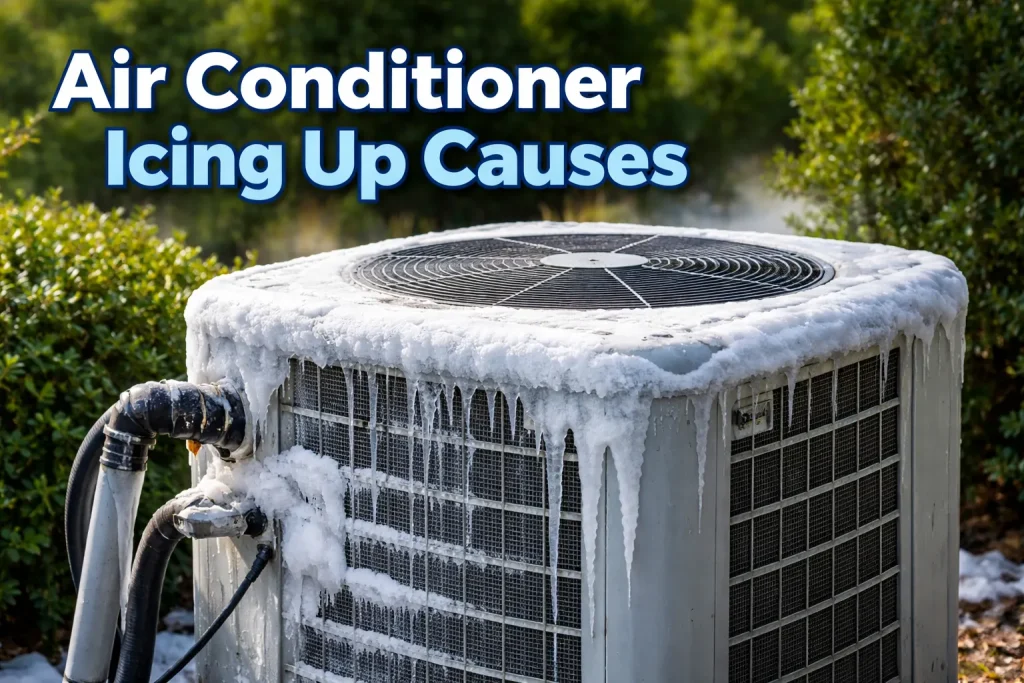
Ice on the indoor coil or refrigerant pipes during cooling needs attention: stop cooling and let the ice thaw before checking accessible filters and vents. Outdoor frost during heating is different; a reverse-cycle system can clear it through its normal defrost cycle. Persistent ice or repeated loss of performance needs a technician.
However, air conditioner freezing up is actually a common issue in split system and ducted air conditioning systems. When airflow becomes restricted or refrigerant pressure drops too low, the evaporator coil temperature can fall below freezing. Moisture in the air then freezes onto the coil and gradually builds up into ice.
If left unresolved, air conditioner ice build up can lead to:
- Poor cooling performance
- Increased electricity bills
- Water leaks inside the home
- Compressor damage
- Complete system failure
Below we explain why air conditioners freeze up, how to troubleshoot the problem, and what to do when your AC unit freezes up inside your home.
Signs Your Air Conditioner Is Freezing Up
Before the system becomes completely covered in ice, there are usually early warning signs.
Common symptoms of a freezing aircon
- Weak airflow from vents
- Warm air blowing instead of cool air
- Ice on AC unit pipes
- Water leaking from the indoor unit
- Air conditioner running constantly
- Higher electricity bills
One of the most noticeable signs is ice forming on the evaporator coil or refrigerant pipes.
Table: Frozen Evaporator Coil Symptoms
| Symptom | Possible Cause |
| Ice on AC pipes | Low refrigerant or airflow restriction |
| Weak airflow | Dirty air filter |
| AC blowing warm air | Frozen evaporator coil |
| Water leaks from indoor unit | Ice melting inside system |
| AC running continuously | System struggling to cool |
If you notice these symptoms, it’s important to switch the system off and investigate the cause before the problem worsens.
Why Do Air Conditioners Freeze Up?
Air conditioners cool your home using refrigerant that absorbs heat from indoor air through the evaporator coil.
When airflow becomes restricted or refrigerant pressure drops, the coil temperature falls below freezing.
Moisture from the air then condenses and freezes on the coil.
How Air Conditioner Ice Build Up Happens
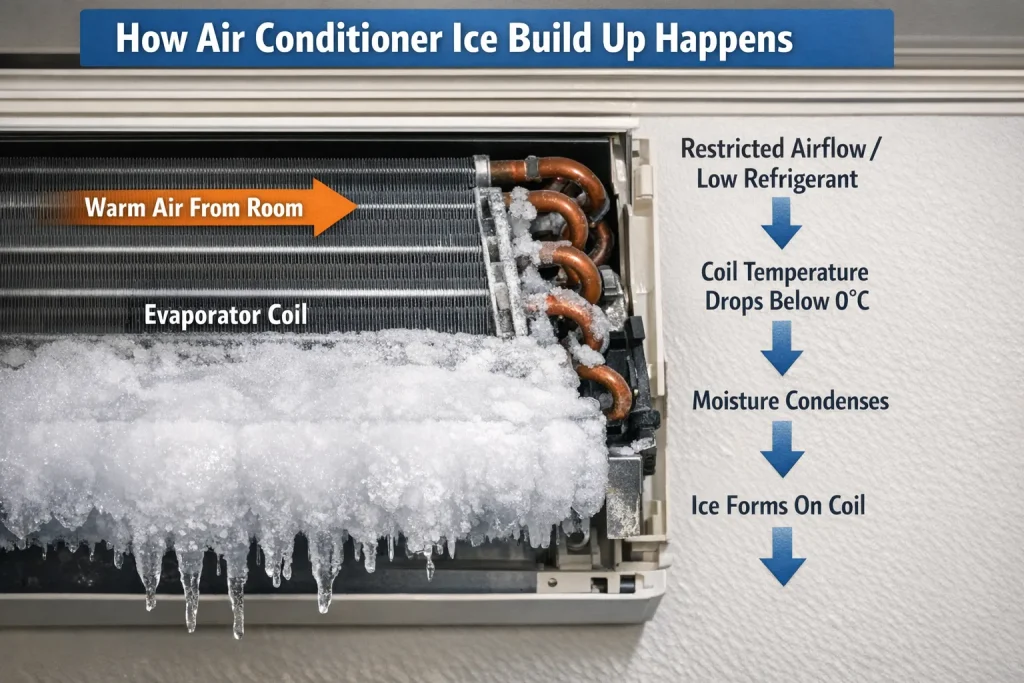
As ice builds up, airflow becomes even more restricted and the AC unit freezing up problem becomes worse over time.
7 Common Causes of Air Conditioner Icing Up
There are several reasons why split system air conditioner icing up problems occur.
1. Dirty Air Filters
A clogged air filter is the most common reason for air conditioner freezing up.
Air filters trap dust and debris, but when they become blocked they restrict airflow across the evaporator coil.
Without enough warm air passing over the coil, the temperature drops too low and ice forms.
Fix
- Clean reusable filters as directed in the model’s manual; replace disposable or damaged filters when specified
- Clean filters regularly
- Schedule professional servicing
2. Blocked Air Vents
Furniture, curtains or rugs can block vents and reduce airflow.
When airflow is restricted, the evaporator coil may freeze and cause aircon icing up.
Fix
Ensure vents are:
- Unobstructed
- Clean
- Fully open
3. Dirty Evaporator Coil
Dust and grime can accumulate on the evaporator coil over time.
This reduces the coil’s ability to absorb heat and causes temperatures to drop too low.
Result
Ice forms on the coil and spreads across the refrigerant lines.
4. Low Refrigerant Levels
Air conditioners operate on a sealed refrigerant system, so refrigerant should not run low.
If levels drop, it usually indicates a refrigerant leak.
Low refrigerant pressure causes evaporator coil temperatures to drop below freezing, which results in ice on AC unit components.
This issue should always be handled by a licensed technician.
5. Faulty Fan Motor
The indoor fan circulates air across the evaporator coil.
If the fan motor slows down or stops working, airflow decreases and the system may freeze.
6. Thermostat Problems
If the thermostat is faulty or incorrectly calibrated, the air conditioner may run continuously.
This can cause the evaporator coil to become too cold and develop ice.
7. Blocked Condensate Drain Line
Air conditioners produce condensation as they cool humid air.
If the drain line becomes blocked with dust or debris, water may freeze inside the system.
This can contribute to air conditioner ice build up.
Troubleshooting Checklist: What To Do When Your AC Unit Freezes Up Inside
If you discover ice on your AC unit, follow these steps.
Table: AC Freezing Troubleshooting Guide
| Step | What To Check | Possible Fix |
| 1 | Air filter | Clean or replace filter |
| 2 | Air vents | Remove obstructions |
| 3 | Thermostat settings | Keep cooling off until the ice has thawed and the cause is addressed |
| 4 | Outdoor unit | Remove debris |
| 5 | Refrigerant pipes | Check for ice buildup |
| 6 | Drain line | Arrange professional help for inaccessible or recurring blockages |
If the problem continues after these checks, professional servicing is recommended.
How To Defrost a Frozen Air Conditioner
If your system has already frozen, follow this process.
Step 1 – Turn Off the Air Conditioner
Switch off the cooling mode immediately.
Running a frozen air conditioner can damage the compressor.
Step 2 – Allow Ice To Melt
Let the ice thaw naturally.
Thawing time varies with the amount of ice and room conditions. Do not chip away ice or apply heat to the coil, and keep water away from electrical components.
Step 3 – Run Fan Mode
Switch the system to fan-only mode to circulate warm air and melt the ice faster.
Step 4 – Check Filters and Airflow
Inspect filters and vents before restarting the system.
Prevention Guide: How To Stop Air Conditioner Freezing
Regular maintenance can prevent most air conditioner freezing problems.
Maintenance Checklist
| Task | Frequency |
| Inspect and clean accessible filters | Follow the model’s manual; dusty conditions may require more frequent checks |
| Clean vents | Every 3 months |
| Professional service | Once per year |
| Check outdoor unit | Every season |
Preventative maintenance improves efficiency and reduces the risk of system breakdown.
When To Call an Air Conditioning Technician
While some issues can be resolved with simple maintenance, others require professional repairs.
Call a technician if:
- Ice returns after cleaning the filter
- Refrigerant lines are frozen
- The AC blows warm air
- Water leaks around the indoor unit
- The system stops cooling completely
Professional technicians can diagnose issues such as refrigerant leaks, compressor faults or electrical failures.
Professional Air Conditioning Repair Services in Brisbane
If your air conditioner keeps freezing up, it may indicate a deeper mechanical problem within the system.
At Sun City Air, our technicians diagnose and repair a wide range of air conditioning faults including:
- Refrigerant leaks
- Evaporator coil problems
- Compressor failures
- Capacitor replacements
- Electrical faults
If your AC unit freezing up problem continues after troubleshooting, our team can inspect the system and provide a free quote for air conditioning repairs in Brisbane.
Frequently Asked Questions
Why is my air conditioner icing up?
Air conditioners usually ice up due to restricted airflow or low refrigerant pressure. When airflow decreases, the evaporator coil becomes too cold and moisture freezes on the coil surface.
What causes an air conditioner to ice up?
Common causes include dirty air filters, blocked vents, refrigerant leaks, faulty fans and clogged condensate drains. All of these issues reduce airflow or cooling efficiency, which can lead to ice buildup on the evaporator coil.
What should I do when my AC unit freezes up inside?
Turn off the air conditioner immediately and allow the ice to thaw. Check air filters and vents for airflow problems before restarting the system.
Can a dirty filter cause AC freezing?
Yes. Dirty filters restrict airflow across the evaporator coil, causing temperatures to drop below freezing and ice to form.
How long does it take for a frozen AC to thaw?
There is no fixed thawing time for every system. Keep cooling off until all ice has melted; if icing returns, arrange an inspection rather than repeatedly restarting the unit.
Filter care depends on the model and filter type. See Daikin’s filter maintenance guidance as an example, and follow the instructions supplied with your own unit.