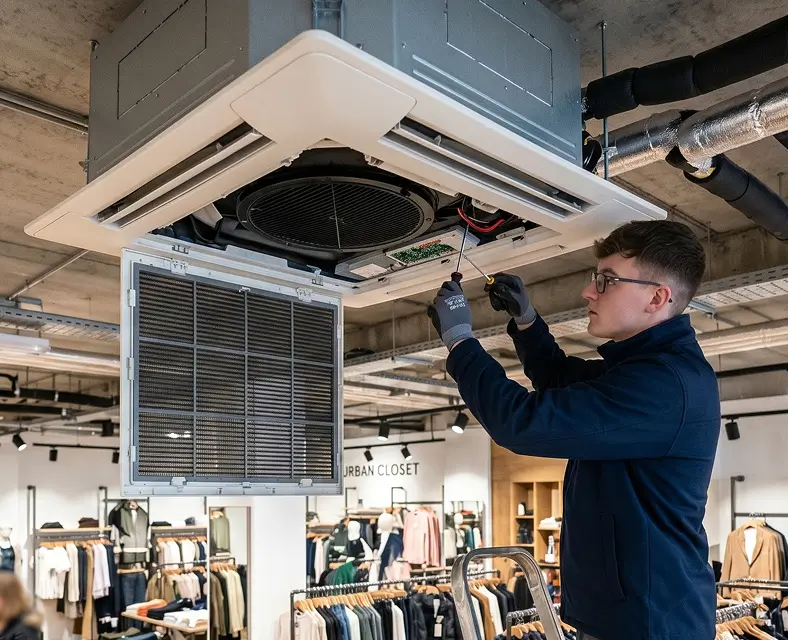
Sun City Air Conditioning provides professional air conditioner cleaning in Brisbane for split systems, ducted systems, multi-head units and commercial equipment. Cleaning targets dirt and build-up on accessible components such as filters, coils, fan wheels, drain pans and condensate lines, with the scope confirmed for your system.
When booking, tell us the system type, number of indoor units, access arrangements and whether you have noticed odours, visible build-up or reduced airflow. See our air conditioner cleaning cost guide for quote factors.
Cleaning and routine maintenance have different scopes. Compare air conditioner servicing if you need an operational check. If the unit has stopped working or displays a fault code, request a repair assessment so the cause can be identified.

Dust and debris can build up on filters, coils and fan components, restricting airflow. If you notice visible build-up, persistent odours or reduced airflow, an inspection can help establish whether cleaning is needed or whether the system has another fault.
Filter care and a professional deep clean are different tasks. Follow the operating manual for your model when accessing and cleaning user-removable filters. Daikin provides filter-cleaning guidance; specialist filters may have different care or replacement requirements.
The appropriate cleaning interval depends on usage, dust exposure, system condition and the manufacturer’s instructions. Ask for an assessment if dirt or odours remain after routine filter care. Cleaning can address build-up, but it does not repair electrical, refrigerant or mechanical faults.
When booking, provide the number and type of units, model details and access requirements. For a business with several systems, explore our commercial air conditioning services. If cooling has stopped or a fault code appears, request an air conditioning repair assessment.
At Sun City Air Conditioning, our split system cleaning in Brisbane process is designed to remove contamination thoroughly while protecting your home and restoring system performance.
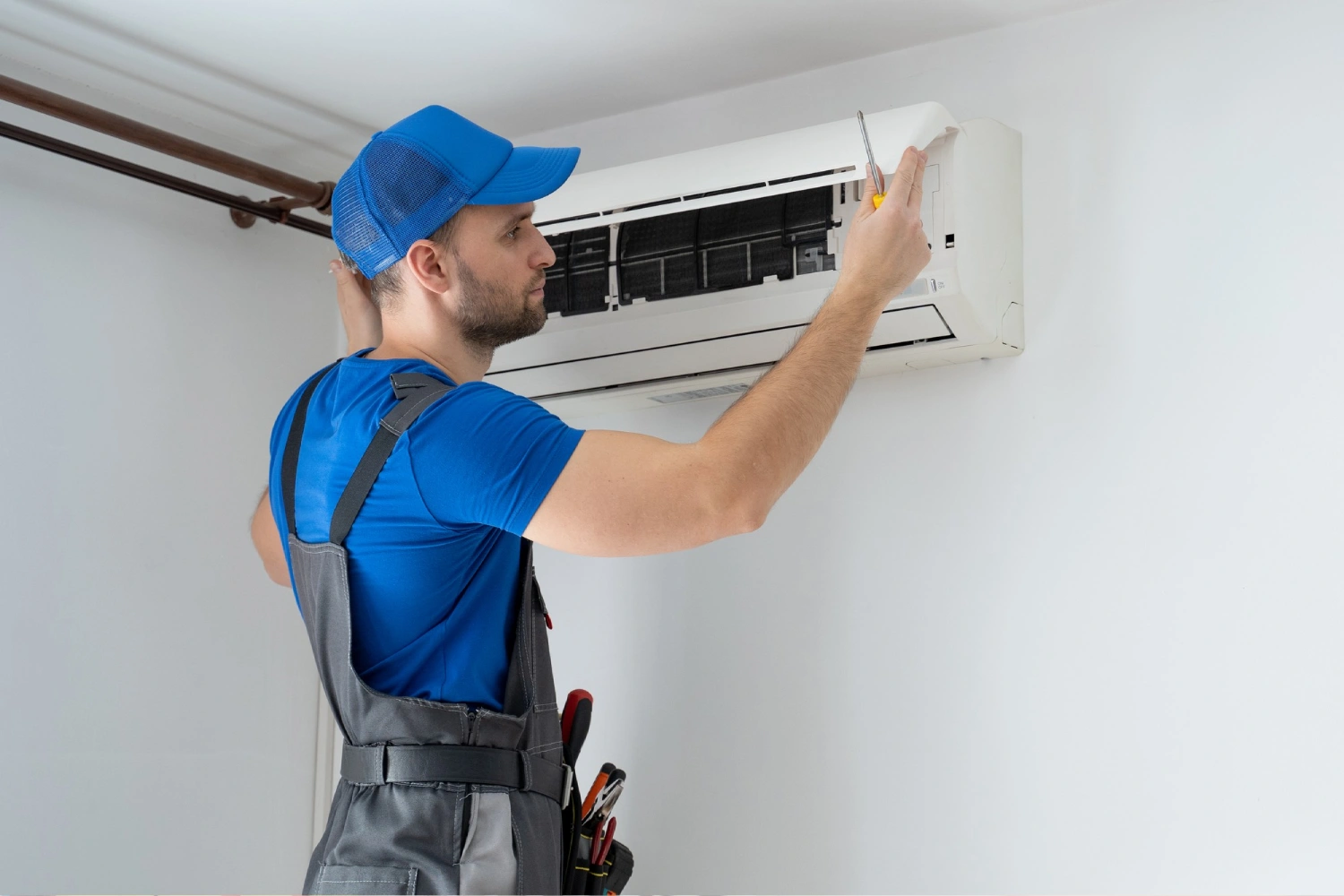
Every cleaning begins with a detailed inspection of the system to assess contamination levels and identify any existing mechanical or drainage issues. Our technicians inspect the evaporator coil, fan wheel, drain pan, filters, and outdoor components before starting the cleaning process.
This inspection also allows us to identify signs of refrigerant leaks, blocked drains, damaged insulation, or electrical concerns that may require further attention.
Before cleaning begins, we install professional waterproof protective sheeting around the indoor unit to collect debris, dirty water, and runoff generated during the cleaning process.
Furniture, flooring, and surrounding surfaces are carefully protected to ensure your home remains clean throughout the service.
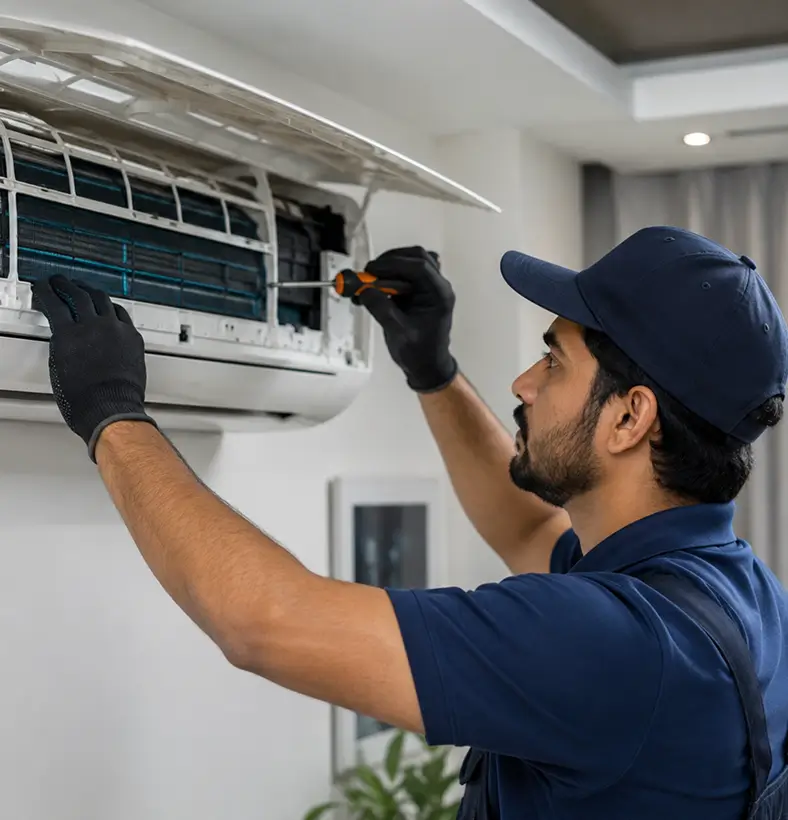
Air filters are removed and thoroughly cleaned using antimicrobial cleaning solutions designed to remove dust, pollen, bacteria, and mould build-up.
Filters are soaked, scrubbed, rinsed, and dried before reinstallation. If filters are damaged or excessively deteriorated, our technicians will recommend replacement options.
The evaporator coil is one of the most important parts of the cleaning process. This component often contains the highest concentration of mould, dirt, bacteria, and biological growth inside the system.
We apply professional-grade coil cleaners designed specifically for air conditioner cleaning in Brisbane systems and use low-pressure rinsing methods that safely remove contamination without damaging delicate fins or internal components.
The indoor fan wheel is one of the most common locations for heavy mould build-up in Brisbane air conditioners. Dark mould often forms on fan blades due to moisture and restricted airflow.
Our technicians carefully clean the fan wheel using antimicrobial treatments to remove built-up contamination and restore smooth airflow through the system.
Blocked drains and dirty drain pans are common causes of water leaks and musty smells. We thoroughly clean and sanitise the drain pan while flushing the condensate line with biocide treatment to remove blockages and inhibit future algae growth.
This process helps prevent water leaks and ongoing mould development inside the unit.
Where an antimicrobial treatment is appropriate, its suitability depends on the product, equipment and application instructions. Ask which product is proposed and confirm any ventilation, drying or re-entry requirements before treatment. There is no single protection period that applies to every system or operating environment.
After cleaning, the system is fully reassembled and tested to confirm correct operation, airflow, drainage, and cooling performance.
Our technicians run the system for approximately 15 minutes to ensure the unit is operating efficiently and there are no leaks or airflow restrictions.
If your air conditioner smells musty, struggles to cool properly, or has not been professionally cleaned within the past year, now is the ideal time to book a deep clean.
Sun City Air Conditioning provides detailed AC cleaning in Brisbane designed to improve air quality, restore efficiency, and remove harmful contamination from inside your system.
Based on our experience providing air conditioning cleaning in Brisbane, many systems contain far more contamination than homeowners expect.
Systems that have not been professionally cleaned for several years commonly show:
Cleaning removes accessible dirt from the components included in the agreed scope. The work needed depends on the equipment and its condition.
Routine filter care helps prevent dirt from restricting airflow. Follow the model-specific cleaning and replacement instructions between professional visits.
Reduced airflow may improve when a blockage is removed. Persistent poor performance needs further assessment rather than repeated cleaning alone.
Odours can have several causes. Tell us when the smell occurs and whether there are leaks or visible build-up so the relevant components can be assessed.
Ask which components were cleaned, whether any faults need attention and what maintenance is appropriate for your system. Cleaning is not a guarantee of relief from asthma or allergies.
Professional cleaning frequency depends on system condition, usage, dust exposure and the manufacturer’s maintenance guidance. Routine filter care is needed between professional visits. Arrange an assessment if visible build-up, odours or reduced airflow persist rather than relying on a fixed cleaning interval for every system.
Follow your model’s operating manual for user-removable filters and isolate the unit as instructed before cleaning. Some filters can be washed; others require different care or replacement. Let washable filters dry as directed before refitting. Leave internal electrical components and work requiring dismantling to a qualified technician.
The appointment length depends on the system type, number of indoor units, amount of build-up and access. Tell us these details when booking so we can confirm an expected timeframe. Multi-unit and ducted systems may require more time than a single accessible split system.
Cleaning can improve airflow when dirt or blocked filters are contributing to the problem. It will not resolve every cooling fault. If performance remains poor, or the unit shows a fault code, leaks or stops operating, arrange a repair assessment.
Suitability and precautions depend on the specific product and how it is applied. Ask for the product details and follow its ventilation, drying and re-entry instructions. Tell the technician about occupants, pets or particular sensitivities before work begins; do not assume every treatment has the same 30-minute drying period.