Mitsubishi Air Conditioner Troubleshooting – Brisbane Expert Tips
- Oct 02, 2026
- Troubleshooting
Jay Carby is a qualified technician with over 15 years experience. Jay leads the installation team and plays a key role in ensuring projects are delivered efficiently and to a high standard.
Why Isn't Your Mitsubishi Air Conditioner Working?
Mitsubishi Electric air conditioners are recognised for their reliability, quiet operation, and energy efficiency, making them one of the most popular choices for Brisbane homes. However, even premium systems can occasionally experience faults caused by everyday wear, electrical issues, blocked airflow, or lack of maintenance. Whether your Mitsubishi air conditioner won't turn on, isn't cooling effectively, is leaking water, or is displaying flashing lights, identifying the problem early can often prevent unnecessary repairs and minimise downtime.
Over the years, I've found that many Mitsubishi service calls involve issues that homeowners could safely identify before arranging a repair. Others require specialised diagnostic equipment and the expertise of a licensed technician to resolve safely.
This guide explains the most common Mitsubishi air conditioner problems, practical troubleshooting steps you can try yourself, common error codes, and the situations where professional repairs are recommended. I'll also share insights from servicing Mitsubishi systems throughout Brisbane to help you understand why these faults occur and how regular maintenance can reduce the likelihood of future breakdowns.
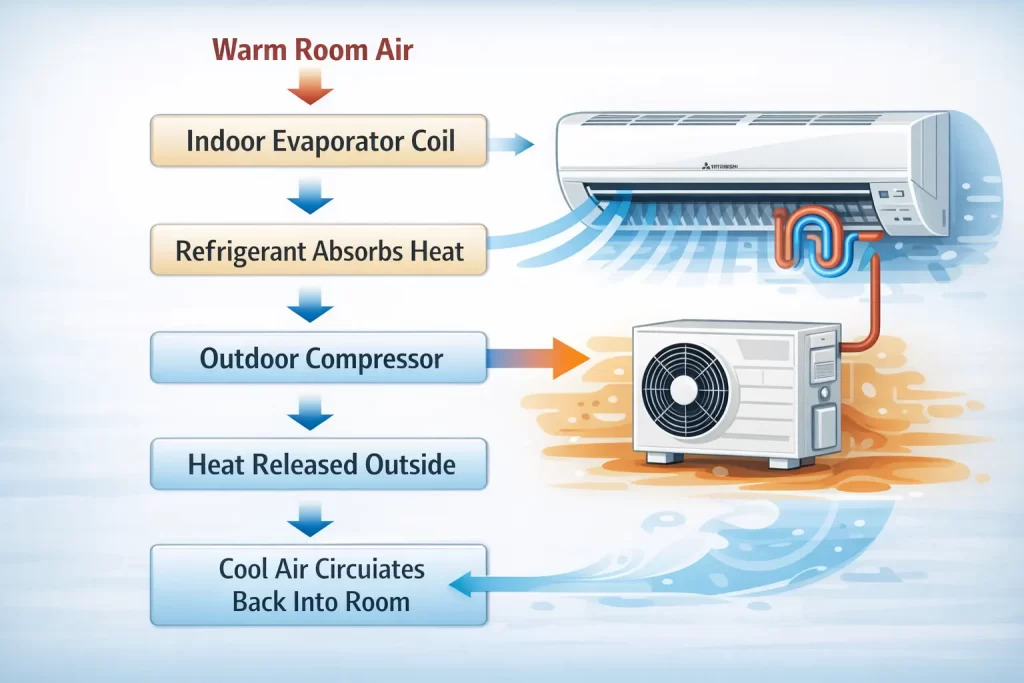
Check the full brand and model first. This guide focuses on Mitsubishi Electric. Mitsubishi Heavy Industries uses different equipment and documentation; use the Mitsubishi Heavy Industries support centre if that is the brand on your unit. For Mitsubishi Electric, find the matching operating instructions through Mitsubishi Electric Australia support.
Check These Things Before Booking a Repair
Before assuming your Mitsubishi air conditioner has developed a major fault, perform these basic checks.
Many common issues can be resolved in just a few minutes.
| Check | What to Do |
|---|---|
| Power supply | Check whether power has been interrupted. If a breaker has tripped, do not repeatedly reset it; arrange qualified assistance. |
| Remote batteries | Replace the batteries if the display is weak or blank. |
| Operating mode | Ensure Cooling or Heating mode has been selected correctly. |
| Temperature setting | Adjust the thermostat several degrees below or above room temperature. |
| Air filters | Clean dirty filters to improve airflow. |
| Outdoor unit | Keep accessible space around the unit clear without opening covers or reaching into the unit. |
| Timer settings | Confirm Sleep Mode or Timer functions haven't been activated accidentally. |
If your system still isn't operating correctly after these checks, further diagnosis may be required.
Common Mitsubishi Air Conditioner Problems
Mitsubishi Air Conditioner Won't Turn On
A Mitsubishi air conditioner that won't start doesn't always indicate a serious failure. In many cases, the problem is related to the power supply or system settings rather than the unit itself.
Begin by checking:
- Circuit breaker or safety switch
- Power at the isolator
- Remote control batteries
- Timer settings
- Indoor unit power indicator
If the unit still refuses to operate, the fault may involve:
- Indoor PCB failure
- Faulty thermistor
- Control board issues
- Compressor protection circuit
- Electrical wiring faults
After a summer storm last year, I was called to a home in Springfield where the homeowner believed their Mitsubishi split system had completely failed. After testing the electrical supply, I found the outdoor isolator had been damaged by a power surge rather than the air conditioner itself. Replacing the isolator restored normal operation without requiring expensive component replacements.
Electrical faults following storms are something we regularly encounter across Brisbane during the storm season.
Mitsubishi Air Conditioner Isn't Cooling Properly
If your Mitsubishi air conditioner is running but struggling to cool your home, the problem may not be as serious as you think.
The most common causes include:
- Dirty air filters
- Blocked outdoor condenser
- Refrigerant loss
- Compressor problems
- Faulty temperature sensors
- Restricted indoor airflow
Always start by cleaning the filters. Dust accumulation significantly reduces airflow and cooling performance while increasing energy consumption.
Next, inspect the outdoor unit to ensure it isn't blocked by leaves, vegetation, or debris.
Professional Insight
One of the first components I inspect when diagnosing poor cooling performance is the outdoor condenser coil. During Brisbane's spring and summer months, it's common to find coils heavily covered with dust, pollen, or leaf litter. Cleaning the condenser can dramatically improve efficiency without replacing any parts.
If airflow appears normal but cooling remains poor, the refrigerant charge and compressor should be inspected by a licensed technician.
Mitsubishi Air Conditioner Is Leaking Water
Water leaking from the indoor unit is one of the most common Mitsubishi air conditioner faults we repair.
Typical causes include:
- Blocked condensate drain
- Dirty filters
- Frozen evaporator coil
- Cracked drain pan
- Incorrect installation angle
- Blocked drain pump
Real Brisbane Service Call
Earlier this year, I attended a property in North Lakes where the homeowner noticed water dripping from their bedroom unit every evening. They assumed the system was simply producing extra condensation because of the humid weather.
When I removed the indoor cover, I found algae completely blocking the drain line. Once the blockage was cleared and the system serviced, the leaking stopped immediately.
Brisbane's humidity means air conditioners remove large amounts of moisture from the air every day, making blocked drain lines one of the most common maintenance issues we see.
Mitsubishi Air Conditioner Is Blowing Warm Air
If your Mitsubishi air conditioner is blowing warm air during cooling mode, several issues could be responsible.
Start by checking:
- Cooling mode is selected.
- Temperature settings are correct.
- Filters are clean.
- Outdoor unit has unrestricted airflow.
If everything appears normal, possible faults include:
- Refrigerant leak
- Compressor failure
- Expansion valve issue
- Faulty reversing valve
- Sensor malfunction
Refrigeration faults should always be diagnosed by an ARC licensed technician.
Mitsubishi Air Conditioner Is Making Strange Noises
Although Mitsubishi systems are known for their quiet operation, unusual sounds should never be ignored.
| Noise | Possible Cause |
|---|---|
| Clicking | Normal relay operation or expansion |
| Buzzing | Loose electrical component |
| Grinding | Fan motor or bearing wear |
| Hissing | Refrigerant movement or leak |
| Rattling | Loose casing or debris |
Occasional clicking during start-up is usually normal, but persistent grinding or buzzing noises should be investigated promptly to avoid further component damage.
Mitsubishi Air Conditioner Smells Bad
Unpleasant odours generally indicate maintenance issues rather than major mechanical failures.
Common causes include:
- Dirty evaporator coil
- Mould growth
- Bacteria inside the drain pan
- Dust accumulation
- Blocked condensate drain
Technician's Advice
Many homeowners switch their air conditioner off immediately after cooling the room. I recommend allowing the fan mode to run for several minutes before turning the system off. This helps dry moisture from the indoor coil and significantly reduces mould growth, especially during Brisbane's humid summer months.
Mitsubishi Air Conditioner Flashing Lights
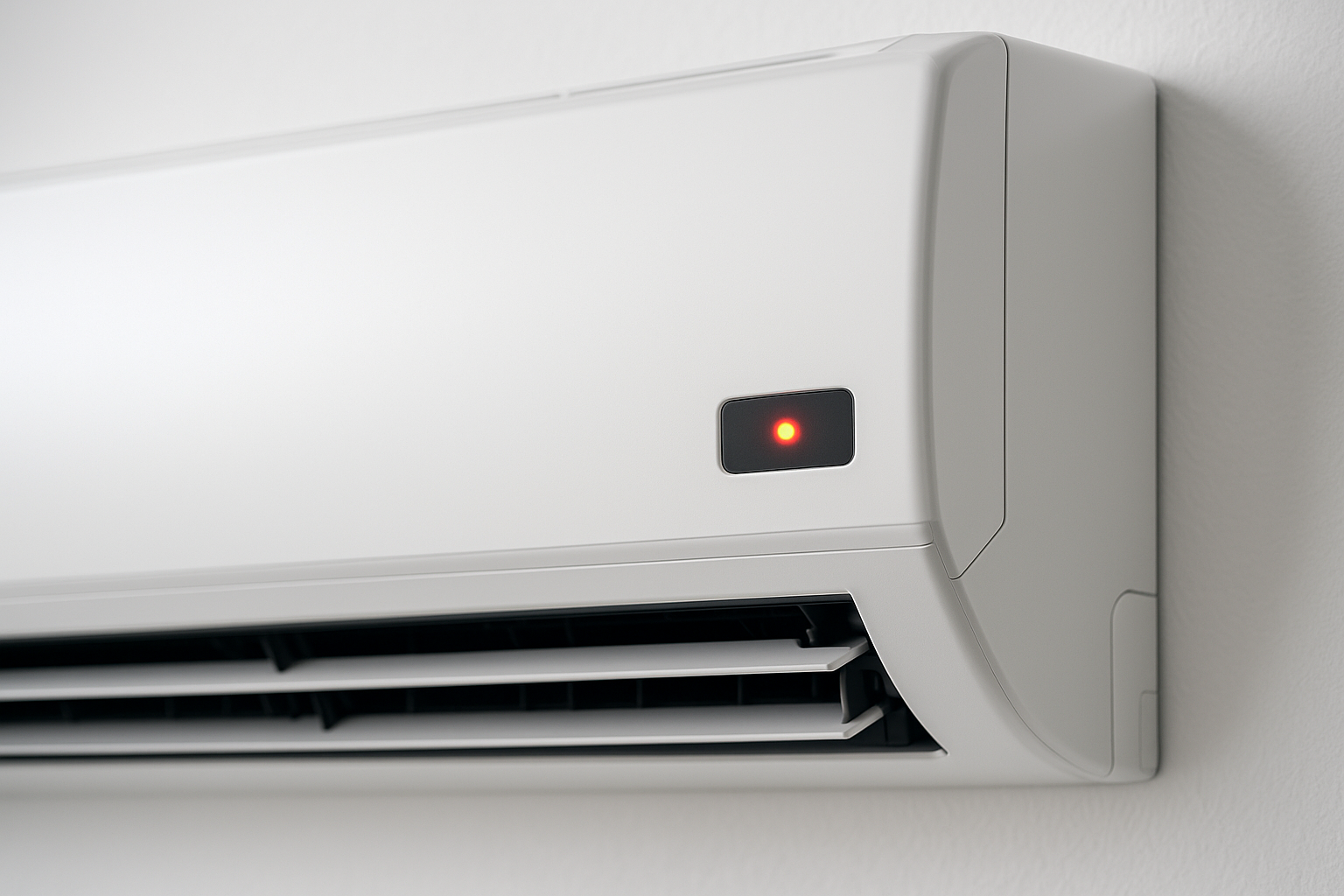
Flashing lights on a Mitsubishi Electric air conditioner are designed to alert you that the system has detected a fault or entered a protective operating mode. While some flashing indicators are perfectly normal during heating or defrost cycles, continuous flashing often means the unit requires further investigation.
Record the exact light name, colour and flash sequence, or photograph the controller code, before restarting. Check the operating instructions for your model to distinguish a normal indication from a fault. Only follow a restart procedure specified for that model; if the indication returns, arrange diagnosis rather than repeatedly resetting the power.
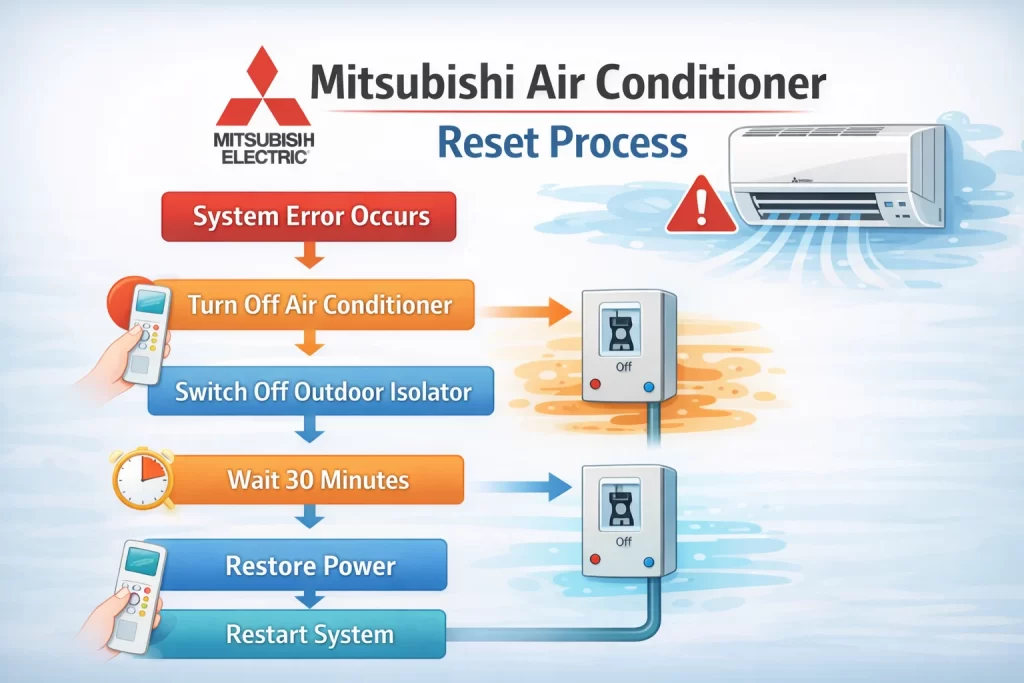
From my experience servicing Mitsubishi systems throughout Brisbane, homeowners often worry that flashing lights automatically mean the air conditioner needs replacing. More often than not, the system is protecting itself from damage caused by restricted airflow, a sensor fault, or a communication issue between the indoor and outdoor units. Identifying the error code is usually the quickest way to determine the next step.
Mitsubishi Remote Control Isn't Working
Sometimes the air conditioner isn't at fault at all.
Before arranging a repair, check the following:
- Replace the remote control batteries.
- Ensure nothing is blocking the infrared signal.
- Check the remote display is operating correctly.
- Confirm the indoor unit has power.
- Reset the remote if your model allows.
If the display is functioning but the indoor unit doesn't respond, the receiver inside the air conditioner or the remote itself may require professional testing.
Mitsubishi Indoor Unit Is Freezing Up
Ice forming on the indoor unit usually indicates that airflow or refrigerant flow has been affected.
Common causes include:
- Dirty return air filters
- Blocked supply or return vents
- Low refrigerant
- Faulty indoor fan motor
- Temperature sensor malfunction
If ice is visible, switch the system off immediately and allow it to thaw naturally before restarting it.
One repair that stands out involved a Mitsubishi split system in an Everton Park home that repeatedly froze overnight. The homeowner assumed the refrigerant had leaked. After inspection, I found the filters were heavily clogged with pet hair, restricting airflow enough to freeze the evaporator coil. Once the filters were cleaned and the system serviced, it operated normally without requiring any refrigerant work.
Understanding Mitsubishi Electric Error Codes
A code is a diagnostic clue, not proof that a particular part needs replacing. Match it to the indoor unit, outdoor unit and controller model. Do not apply a code table from another Mitsubishi product range or from Mitsubishi Heavy Industries to your system.
For example, Mitsubishi Electric's packaged-system manual describes P6 as a freezing or overheating protection indication and E6/E7 as indoor/outdoor communication indications for the equipment covered by that manual. These examples are not a universal table for every Mitsubishi air conditioner. Use the documentation for your exact model to confirm the meaning.
When requesting a repair, provide the model numbers, exact code or flash pattern, whether the fault occurs in cooling or heating, and whether it followed a power outage. Mention any water leak, ice, unusual sound or tripped breaker. This information helps the technician plan the assessment without guessing the failed component.
If the system smells burnt, sparks, repeatedly trips a breaker or leaks near electrical parts, stop using it and arrange qualified help. Do not open electrical covers or bypass protective controls. For persistent faults, see our Brisbane air conditioning repair service.
How Brisbane's Humidity Affects Mitsubishi Air Conditioners
Although Mitsubishi Electric systems are engineered to perform reliably in Australian conditions, Brisbane's climate places additional demands on every air conditioning system.
During summer, prolonged periods of high humidity mean your air conditioner works continuously to remove both heat and moisture from the air. This increases condensate production and places greater demand on drainage systems.
Over the years, I've noticed several recurring Brisbane-specific issues affecting Mitsubishi air conditioners:
- High humidity encouraging algae growth inside condensate drains.
- Heavy summer storms causing electrical faults and damaged isolators.
- Dust, pollen, and jacaranda flowers restricting airflow through outdoor condensers.
- Leaf litter blocking outdoor units in established suburbs.
- Salt-laden coastal air accelerating corrosion in bayside locations.
One thing I've consistently observed is that systems receiving annual servicing cope significantly better with Brisbane's demanding climate than those left unattended for several years.
Preventative Maintenance for Your Mitsubishi Air Conditioner
Preventative maintenance is the simplest way to improve reliability, maintain energy efficiency, and extend the lifespan of your Mitsubishi air conditioner.
I recommend homeowners:
- Clean air filters every two to four weeks during heavy use.
- Keep curtains, furniture, and other obstructions away from indoor vents.
- Remove leaves, grass, and debris from around the outdoor condenser.
- Schedule professional servicing every year.
- Test the system before the start of summer.
- Investigate unusual noises, smells, or reduced performance as soon as they appear.
In my experience, many expensive compressor and electronic failures could have been avoided if the system had been serviced before small issues became major problems.
What You Should Never Attempt Yourself
Only carry out accessible filter care described in the operating manual, with the system stopped as instructed. Internal cleaning, electrical work and refrigerant repairs should be carried out by a suitably licensed technician.
Never attempt to:
- Recharge refrigerant.
- Repair refrigerant leaks.
- Replace compressors.
- Repair electrical wiring.
- Replace printed circuit boards.
- Bypass safety switches or protective devices.
- Disassemble the outdoor refrigeration circuit.
These repairs require specialised tools, refrigerant handling licences, and compliance with Australian safety standards.
When Should You Call a Professional?
Arrange a professional inspection if your Mitsubishi air conditioner:
- Continues displaying error codes.
- Leaks water from the indoor unit.
- Frequently trips the circuit breaker.
- Produces burning smells.
- Makes loud grinding, buzzing, or screeching noises.
- Stops cooling despite clean filters and correct settings.
- Repeatedly freezes.
- Short cycles every few minutes.
Prompt repairs often prevent further damage to expensive components such as compressors, fan motors, and electronic control boards.
Frequently Asked Questions
Why is my Mitsubishi air conditioner flashing a green light?
The meaning depends on the model and which indicator is flashing. Record the light name, colour, number of flashes and pauses, then check the matching operating manual. Do not assume that every green flashing light is defrost or that a reset will fix it.
Why is my Mitsubishi air conditioner not cooling properly?
Dirty filters, blocked outdoor coils, incorrect settings, refrigerant leaks, compressor issues, or faulty sensors can all reduce cooling performance. Begin with the basic troubleshooting steps before requesting professional repairs.
How often should I clean my Mitsubishi air conditioner filters?
For most Brisbane households, filters should be cleaned every two to four weeks during periods of regular use. Homes with pets, nearby construction, or high dust levels may require more frequent cleaning.
Why is my Mitsubishi air conditioner leaking water?
Blocked condensate drains, frozen evaporator coils, dirty filters, or damaged drain components are among the most common causes. Water leaks should be investigated promptly to prevent damage to ceilings, walls, or flooring.
Can I reset my Mitsubishi air conditioner?
Follow the operating instructions for your exact Mitsubishi Electric or Mitsubishi Heavy Industries model. There is no single reset time for every system. Record the fault first, and do not repeatedly reset a tripped breaker or a recurring fault. Arrange professional diagnosis if it returns.
Need Professional Mitsubishi Air Conditioner Repairs?
If you've worked through these troubleshooting steps and your Mitsubishi air conditioner still isn't operating correctly, the experienced team at Sun City Air Conditioning is here to help.
We diagnose and repair all major Mitsubishi Electric split systems and ducted air conditioning systems across Brisbane. Whether you're dealing with flashing error codes, water leaks, poor cooling, unusual noises, or electrical faults, our licensed technicians will identify the cause and recommend the most cost-effective repair solution.
Call Sun City Air Conditioning today on (07) 3283 5566 to arrange fast, reliable AC repairs in Brisbane.
About the Author
Jay Carby – Install Manager at Sun City Air Conditioning
Jay Carby is a qualified technician with over 15 years experience. Jay leads the installation team and plays a key role in ensuring projects are delivered efficiently and to a high standard.