How much does air conditioning installation cost?
- Oct 23, 2021
- Troubleshooting
With hot weather never far away in Australia, it’s time to start thinking about how you’ll stay cool in the inevitable heat waves of the summer months. The obvious answer is air conditioning. If you don’t already have a system installed, you may want to consider investing in one before the pre-summer rush kicks in.
While getting air conditioning sounds simple in theory, in reality, it can actually be quite complex when taking into account the different types of air conditioners available, what’s best suited for you and how much it costs to run and install.
Fortunately, we’ve put together a guide to help you understand your air conditioning options, and the approximate costs you’ll be looking at to install them.
Factors that affect air conditioning cost
Installation cost depends on the equipment, property and work included in the quote. The following factors can affect the total.
Whether there was a previous air conditioning system in place
An existing system may affect the scope of AC installation. Ask the installer to assess the condition and suitability of existing components rather than assuming they can all be reused.
Refrigerant pipework and electrical cables need to be assessed against the replacement model’s installation requirements. Daikin’s piping-reuse guidance cautions against general reuse, with exceptions for particular systems. Requirements can differ between manufacturers and models, so ask the installer what can be retained before allowing for savings.
The size of the unit
Another factor that affects the price of installing an air conditioning system is the size of the unit. A small studio apartment is obviously going to take a lot less energy – and a smaller system – to cool, as compared to a large house.
A small apartment can sometimes suffice with a small wall hung unit, while a large house will usually need something more powerful, like a central ducted air conditioner. If a homeowner opts for a split system air conditioner, they’ll require multiple units throughout a house in order to cool the entire place.
If a homeowner opts for an air conditioner with ductwork and vents, then the more rooms you have, the higher the costs will be. Air conditioners with ductwork will require ductwork and return air pathways to be installed between all rooms that will be cooled.
Amount of air ductwork required
As we touched on above, if an air conditioner is being installed that requires ductwork, larger houses will cost more. Ductwork is the metal or flexible tubes that transport the cool air (or warm air if you’re using a heating setting) around the house.
Most houses that have central air conditioning using ductwork will have ducts to connect all rooms of the house. This requires extensive labour, and the cost of all of the parts will also drive up the cost of AC installation.
The model and brand you choose
If you’ve ever taken a stroll through an appliance store, you’ll know that there are many, many different brands and sizes of air conditioners on the market. Air conditioners with more power have the ability to cool larger areas, and come at a higher cost. Some brands that are established and trusted – like Daikin – may also have a higher price tag than similar models by lesser-known brands.
The type of air conditioning
Below we elaborate on the most popular types of air conditioning units. However, costs range dramatically between the lowest cost option, which is a portable air conditioner, and a premium ducted air conditioner. Though prices vary greatly, there are many benefits to investing in an appropriately sized air conditioning system.
What types of air conditioners are there?
Ducted air conditioning
When it comes to cooling an entire house, ducted air conditioning is one of the most popular options. This type of air conditioning uses ducts to circulate the air throughout the house.
Ducted air conditioning has the evaporator in the houses roof space and, the condenser, and compressor are all located together outside the house or building that’s being cooled. Ducted air conditioning is ideal for homeowners who are looking for a one stop solution to cool their entire house and prefer the sleek, unobtrusive look of vents over wall units.
Window air conditioner
After a portable air conditioning system, a window air conditioner is one of the most basic types of AC units there is, and they’re often considered a little outdated. Window air conditioners are a unit with all of the working parts of the AC system located within the same unit.
The unit is mounted in a wall or window. They are simple to install but are an inherently noisy form of air conditioning as the compressor (the noisy bit) is mounted in your wall or window.
Wall mount Split system air conditioner
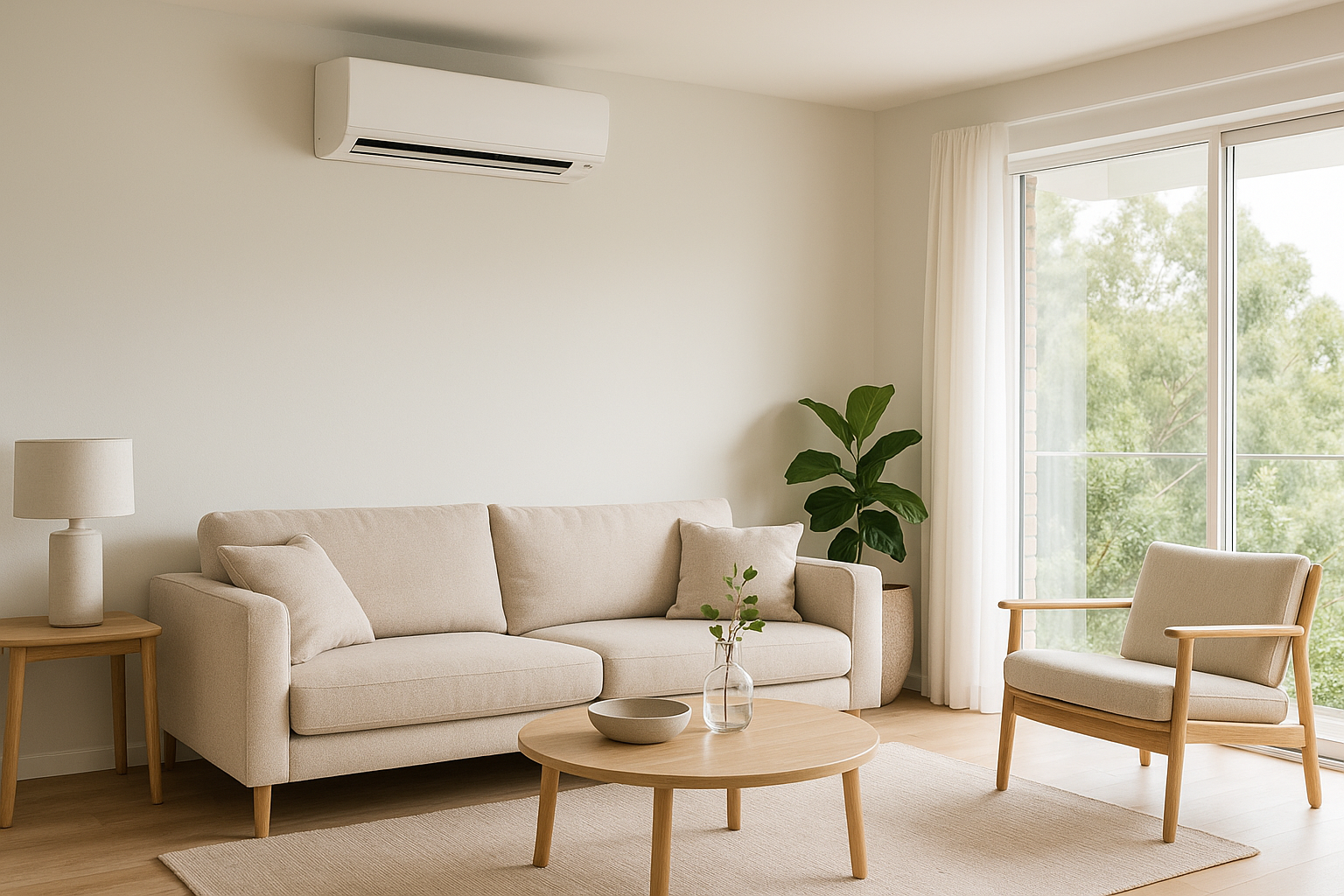
As the name suggests, split system air conditioners are systems with part of the air conditioner located inside the house (or room) and part of the system located outside.
A wall-mounted split system has an indoor unit and an outdoor unit connected by refrigerant pipes and electrical wiring. This wall-mounted arrangement does not use air-distribution ducts; other split-system configurations can use ducted indoor units.
In cooling mode, refrigerant absorbs heat at the indoor coil and the system releases that heat outdoors. The indoor fan circulates air over the coil and back into the room. See Daikin’s explanation of how air conditioning works.
The most common type of split system air conditioners are wall mount unit air conditioners. They can be just one indoor wall unit that’s connected to the outside unit that’s designed to cool one room. Or, a multi-head air conditioning system can be installed, which means multiple indoor units are connected to one outdoor unit.
Each unit can be separately controlled and is ideal for house owners who want to cool just one particular area at a time, instead of the entire house.
Portable air conditioner
A portable air conditioner is the most basic type of air conditioner – it’s easy to install and it’s usually pretty cheap. However, portable air conditioners are only suitable to cool very small spaces and don’t have the capacity to cool many areas effectively.
A typical portable unit stands on the floor and uses a window exhaust kit to discharge warm air outdoors. Follow the specific model’s instructions for ventilation, drainage, electrical supply and clearances.
Ballpark figures for installation of each kind of air conditioner
Each different kind of air conditioner has a different installation process, as well as varying costs for the unit itself. For this reason, the package price of the unit and installation fee will differ greatly depending on what kind of air conditioner you pick. The model and the brand you opt for will also affect the price.
While costs do depend on a number of factors mentioned above, below are some ballpark figures for what you can expect to pay when it comes to air conditioner cost.
Ducted Air Conditioning costs
Ducted air conditioning is one of the most complex choices with a high installation cost. This is because the unit is large – as it will usually be cooling an entire house or big area – and each different room requires ductwork to connect them up. Both of these factors increase both unit costs and installation costs.
For a ducted replacement, ask the installer to inspect existing ducts, insulation, outlets and controls. The quote should state what can be retained and what needs replacing; reuse and savings are not automatic.
To install a central air conditioning system you’ll be looking at an approximate cost of around $1000 per kW. A small four bedroom house normally costs between $10,000 and $12,000.
Window Air Conditioner cost
A self-contained window unit needs secure support, suitable clearances and installation according to its manufacturer’s instructions. Check that the opening and electrical supply are suitable; seek qualified help for any building or electrical work required. You’ll be looking at around $400 – $1000 for a fully installed window air conditioner, depending on the brand and model you choose.
Split system air conditioner costs (wall unit)
A wall-mounted split system requires installation of both indoor and outdoor units, refrigerant pipework and electrical connections. Unlike a ducted system, this arrangement does not require air-distribution ducts. For a split system air conditioner, a technician will need to install the wall unit, the electrical and piping work through the walls, and the outdoor unit. Again, the price will be affected significantly depending on the size, brand and model of unit you choose. However, the approximate cost of a split system air conditioner usually ranges between $1600-$3300, with installation costs included.
Portable air conditioner costs
Portable air conditioners are so simple that they generally won’t require professional installation. After purchasing a portable unit, you’ll just need to make sure the hose is out a window, so that warm air can be released outside. Then, you simply plug in the unit to an electrical plug and power it on.
Air conditioning replacement costs
Blowing hot air, not turning on or an iced-up air conditioner are just a couple of problems that are commonly experienced with air conditioners.
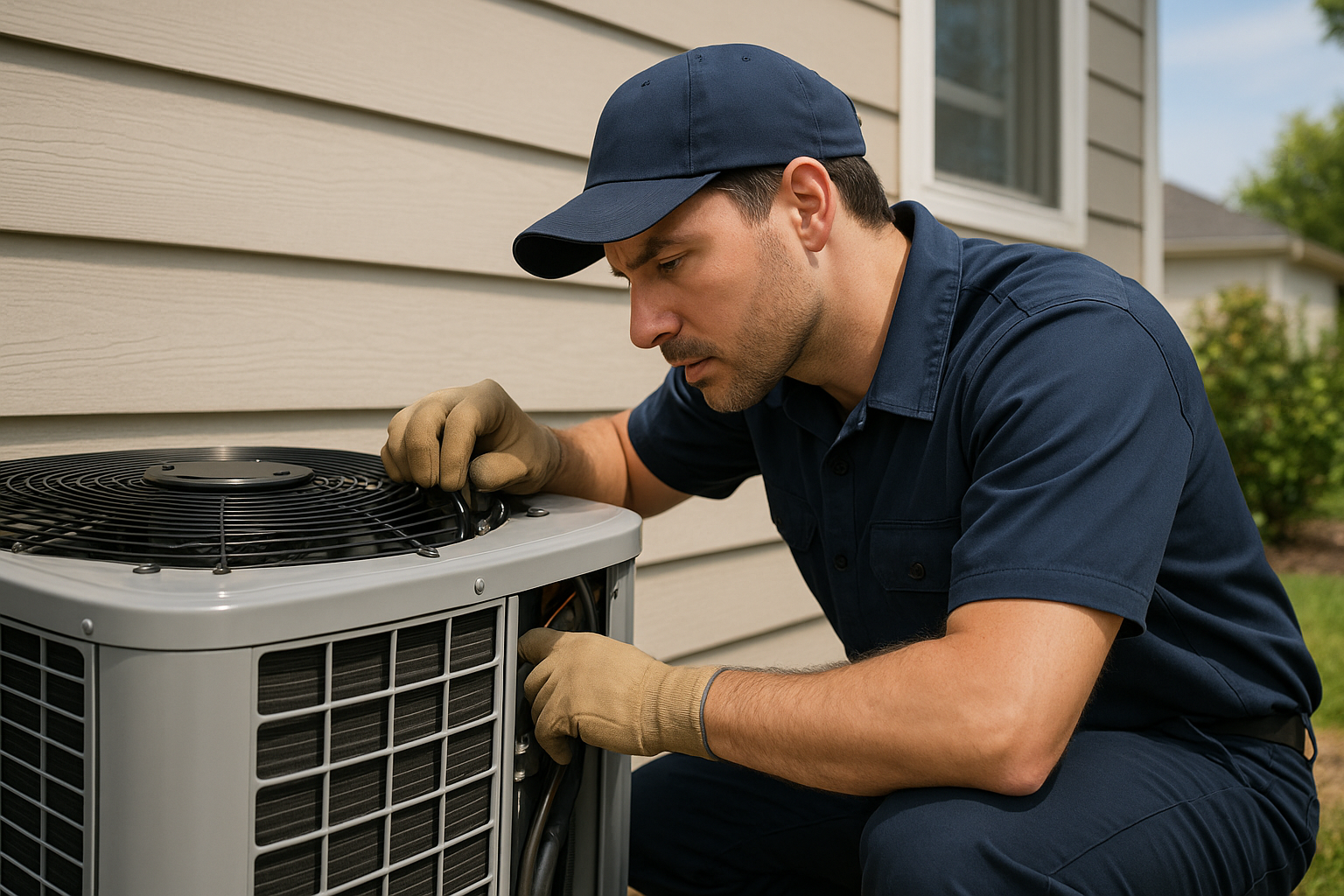
If you’re having a problem with your air conditioner, don’t hesitate to get in touch with our office and we will get one of our technicians, who are very experienced at troubleshooting and fixing all air-con related problems, to attend. Where possible we will fix the issue on site, if that is not possible we will prepare a quote for repair and or replacement of your air conditioning system.
If you’re weighing up whether it’s a better idea to completely replace your air con, or just fix the problem, our team can also advise what they’d recommend, and give you a quote for each option.
Ready for a quote?
If you’re interested in installing an air conditioning system, fixing your current one or would just like some more information about your options, get in touch with our friendly team for a quote or to schedule an at home inspection.