Why Is My Air Conditioner Heat Mode Not Working
- Apr 25, 2026
- Buying Guides
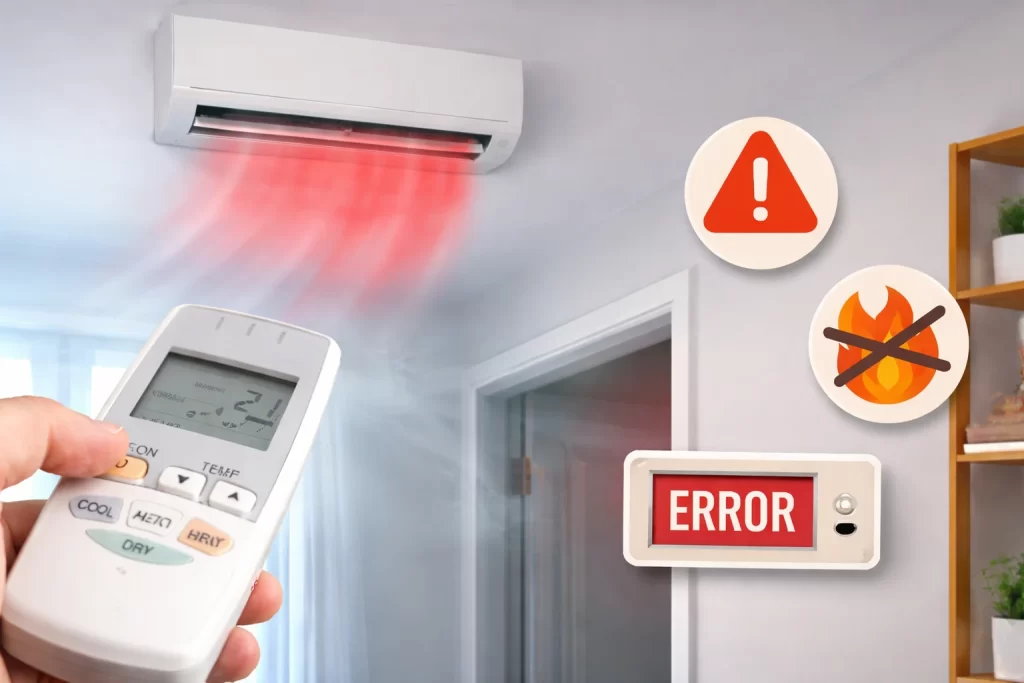
If your air conditioner heat mode is not working, your home can quickly become uncomfortable during colder months. Reverse cycle air conditioners are designed to provide both cooling and heating, but when the heating function stops working properly, it usually indicates a problem somewhere in the system.
Most modern air conditioners installed in Australian homes operate using reverse cycle heat pump technology. Instead of generating heat directly, these systems transfer heat from outside air into your home. When any component involved in this process fails — such as the thermostat, refrigerant system, reversing valve, or compressor — the system may start blowing cold air instead of warm air.
Air Conditioner Heat Mode Not Working
If your air conditioner heat mode is not working, the issue is usually caused by one of the following problems:
- Thermostat set incorrectly or miscalibrated
- Dirty air filters restricting airflow
- Refrigerant leak reducing heating capacity
- Outdoor unit blocked by debris
- Faulty reversing valve or heat pump failure
Before calling a technician, try checking the thermostat settings, cleaning the air filters, and ensuring the outdoor unit has proper airflow. If the system still blows cold air after troubleshooting, professional inspection may be required.
In this guide, we will explain:
- How reverse cycle air conditioners produce heat
- Common reasons heating mode stops working
- Brand-specific heating problems
- Troubleshooting steps you can try at home
- When to call a professional HVAC technician
By the end of this article, you will understand why your air conditioner is not heating properly and what steps you can take to fix the issue.
How Reverse Cycle Air Conditioners Produce Heat
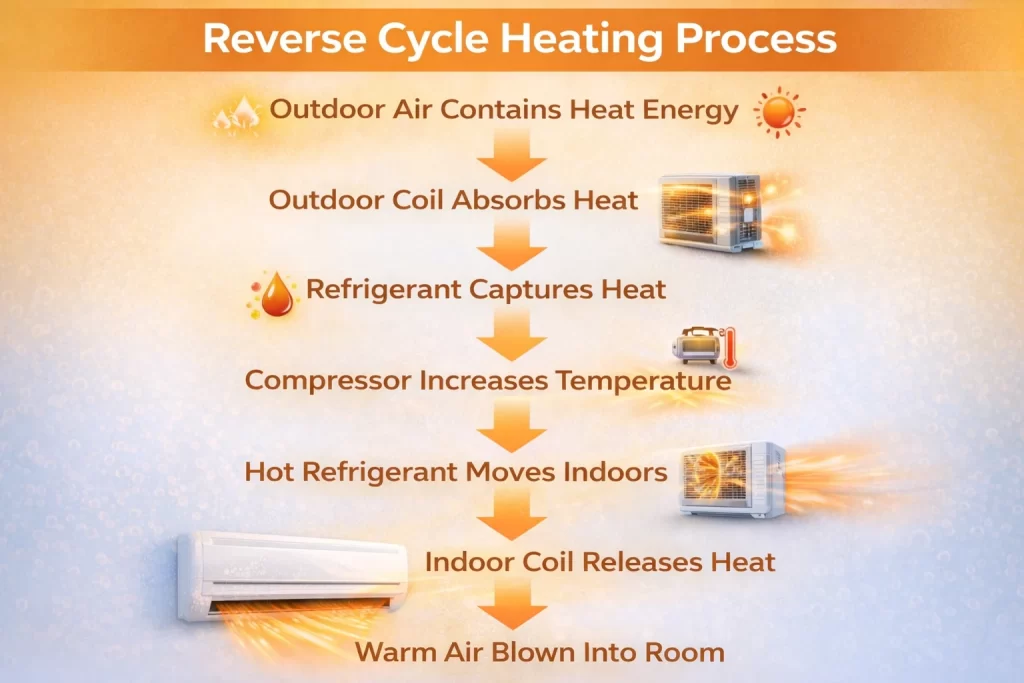
Many people assume air conditioners only cool rooms. However, most systems installed in Australia today are reverse cycle air conditioners, meaning they can both cool and heat indoor spaces.
Unlike traditional heaters that generate heat, reverse cycle systems use a heat pump process that moves heat from outdoor air into your home.
Even during cold weather, the outdoor air still contains heat energy that the system can extract.
If any component in this cycle fails, the air conditioner may stop heating efficiently.
Signs Your Air Conditioner Heat Mode Is Not Working
Heating problems often appear gradually. Recognising the symptoms early can prevent more serious mechanical damage.
Air Conditioner Blowing Cold Air
If your system runs but only produces cold or lukewarm air, the heating cycle may not be functioning properly.
This issue is commonly caused by:
- Faulty reversing valve
- Refrigerant leaks
- Thermostat misconfiguration
Weak Airflow
Poor airflow can prevent warm air from circulating through the room.
Possible causes include:
- Dirty air filters
- Blocked ducts
- Fan motor problems
Unusual Smells
Burning or mouldy smells may indicate:
- Electrical wiring damage
- Dust accumulation in the system
- Mold growth in ductwork
Loud Noises
Reverse cycle air conditioners typically operate quietly. If you hear grinding or rattling sounds, it may indicate mechanical problems such as compressor failure or fan motor damage.
Heat Pump Failure
Heat pump systems contain several components that must work together to transfer heat efficiently.
If any of these components fail, the system may stop producing warm air.
Common heat pump failures include:
- Compressor malfunction
- Reversing valve failure
- Expansion valve blockage
- Outdoor fan motor damage
The reversing valve is particularly important because it controls the direction of refrigerant flow. If this valve becomes stuck, the system may remain in cooling mode even when heating is selected.
Heat pump failures usually require professional diagnosis and repair.
Thermostat Calibration Problems
Incorrect thermostat calibration is one of the most common reasons an air conditioner fails to heat properly.
If the thermostat reads the room temperature incorrectly, it may stop heating before the room reaches the desired temperature.
Common thermostat issues include:
- Incorrect heat mode setting
- Sensor miscalibration
- Low battery power
- Faulty thermostat wiring
Before assuming a major system problem, always check that your thermostat is set to HEAT mode and that the target temperature is higher than the current room temperature.
Refrigerant Problems
Refrigerant plays a crucial role in transferring heat through the system.
If refrigerant levels drop due to leaks, the system cannot absorb enough heat from outside air.
Symptoms of refrigerant issues include:
- Air conditioner blowing lukewarm air
- Ice forming on outdoor coils
- Longer heating cycles
- Reduced heating efficiency
Because refrigerant is regulated, repairs must be carried out by licensed HVAC technicians.
Outdoor Unit Problems That Stop Heating
The outdoor unit is responsible for absorbing heat from the outside air.
If airflow around the outdoor coil becomes restricted, the system may struggle to extract enough heat.
Common causes include:
- Dirt or debris blocking the coil
- Leaves obstructing airflow
- Ice buildup during winter
Cleaning the outdoor unit regularly helps maintain proper heating performance.
Defrost Cycle in Heat Pumps
During cold weather, frost can build up on the outdoor coil.
To prevent this, reverse cycle systems automatically run a defrost cycle.
- Cold Outdoor Temperature
- Outdoor Coil Freezes
- System Detects Frost
- Defrost Cycle Activated
- Ice Melts From Coil
- Heating Mode Resumes
During this process, the system may temporarily stop producing heat. This behaviour is normal unless the system remains stuck in defrost mode.
Air Conditioner Heating Troubleshooting Checklist
Before contacting a technician, there are several simple checks you can perform at home.
Many heating problems are caused by minor issues that can be fixed quickly.
Step-by-Step Troubleshooting
- Ensure thermostat is set to heat mode
- Increase the target temperature
- Clean or replace air filters
- Reset the circuit breaker
- Inspect outdoor unit for debris
- Check that air vents are open
- Wait 5–10 minutes for system warm-up
If your air conditioner still fails to produce warm air after these checks, the issue may require professional repair.
Brand-Specific Air Conditioner Heating Problems
Many homeowners search for heating issues related to specific air conditioner brands.
Below are some common examples.
Samsung Air Conditioner Heat Mode Not Working
If your Samsung air conditioner fails to produce heat, the issue may involve thermostat calibration, sensor faults, or a reversing valve malfunction. Samsung inverter systems may also temporarily stop heating during defrost cycles.
Mitsubishi Air Conditioner Not Heating
Mitsubishi systems are highly reliable, but heating issues can occur due to refrigerant leaks, blocked filters, or control board faults.
Hisense Air Conditioner Heat Mode Not Working
Hisense units may stop heating if airflow becomes restricted or if the outdoor unit sensor fails.
Midea Air Conditioner Heat Mode Not Working
Midea systems may experience heating issues due to thermostat errors, reversing valve problems, or refrigerant pressure imbalance.
Although these brands differ in design, the underlying causes of heating problems are often similar.
Preventing Air Conditioner Heating Problems
Regular maintenance is the best way to prevent heating failures.
Routine servicing helps keep all components operating efficiently.
Professional air conditioner servicing typically includes:
- Cleaning air filters and coils
- Checking refrigerant pressure
- Inspecting electrical components
- Testing thermostat calibration
- Checking airflow and ductwork
Annual servicing can extend the life of your air conditioner and improve energy efficiency.
Air Conditioning Repairs in Brisbane
If your air conditioner heat mode is not working, it’s important to resolve the issue quickly before it becomes worse.
At Sun City Air, our experienced technicians specialise in diagnosing and repairing reverse cycle air conditioning systems across Brisbane.
Our services include:
- Heat pump diagnostics
- Refrigerant leak detection
- Thermostat replacement
- Compressor repairs
- Complete system servicing
If your air conditioner is blowing cold air in heating mode or struggling to warm your home, contact our team today for a free quote on air conditioning repairs in Brisbane.
Frequently Asked Questions
Why is my air conditioner blowing cold air in heat mode?
If your air conditioner blows cold air in heat mode, the system may still be warming up or running a defrost cycle. Other causes include incorrect thermostat settings, low refrigerant levels, or a faulty reversing valve preventing the system from switching to heating mode.
Why is my inverter air conditioner not heating?
If an inverter air conditioner fails to produce heat, it may be due to thermostat calibration problems, refrigerant leaks, or outdoor unit airflow restrictions. Inverter systems also adjust compressor speed automatically, which may temporarily reduce heating output.
What causes a reverse cycle air conditioner to stop heating?
Common causes include thermostat issues, refrigerant leaks, blocked air filters, outdoor unit airflow restrictions, or reversing valve failure. Electrical faults or compressor problems may also prevent the system from transferring heat effectively.
Can dirty air filters stop my air conditioner from heating?
Yes. Dirty or clogged filters restrict airflow and prevent warm air from circulating properly. When airflow is limited, the system struggles to distribute heat efficiently and the room may take longer to reach the desired temperature.
Should I call a technician if my air conditioner heating is not working?
If basic troubleshooting such as checking thermostat settings, cleaning filters, or resetting the circuit breaker does not resolve the problem, it is best to contact a qualified technician to diagnose refrigerant leaks, electrical faults, or compressor issues.
Need help with heating or cooling problems?
If your reverse-cycle system is still not heating after basic checks, Sun City Air can diagnose the fault and recommend the right next step.
- Air conditioning repairs in Brisbane for fault finding, heat pump problems and urgent breakdowns.
- Air conditioning servicing in Brisbane to prevent airflow, thermostat and refrigerant issues.