What To Do If Your Air Conditioner Is Leaking Water?
- Mar 13, 2021
- Buying Guides
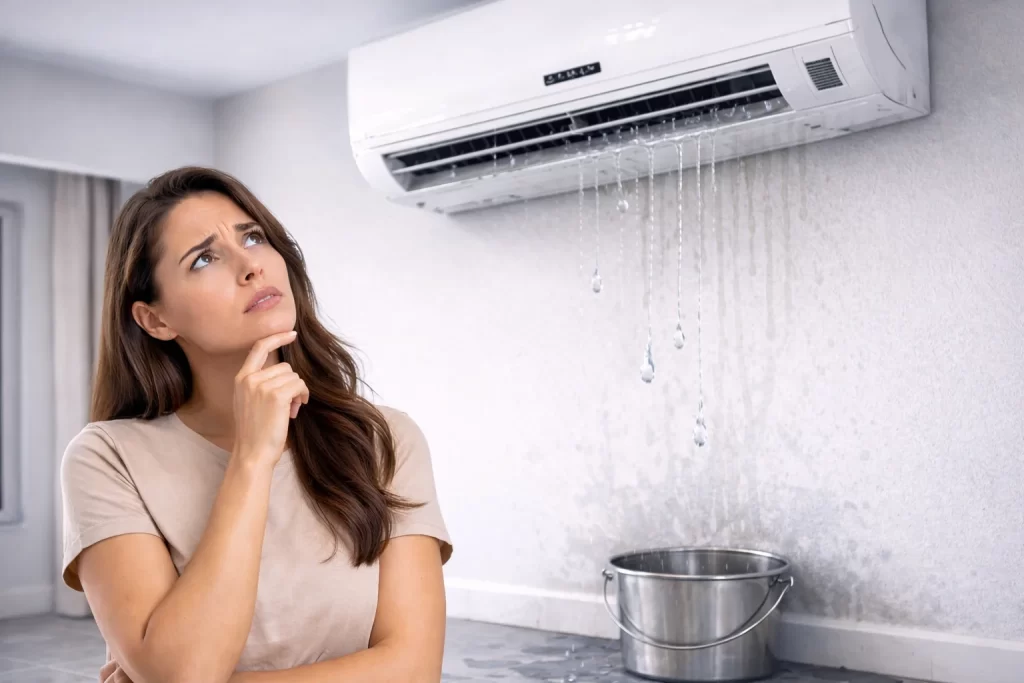
If you notice water dripping from your air conditioner, it can quickly become a frustrating problem for homeowners. When an air conditioner starts leaking water inside your home, it may also be related to issues like AC unit sweating inside, often caused by drainage problems, airflow restrictions, or internal component faults.
Water from the intended outdoor drain can be normal during cooling, but water leaking from the indoor unit, wall or ceiling needs attention. Switch the system off if it is leaking indoors, keep clear of wet electrical equipment and arrange an inspection. The cause needs to be confirmed before a repair can be quoted.
In this guide, we explain:
- Why air conditioners leak water
- The most common causes of AC water leaks
- How to fix an aircon leaking water
- Repair costs in Brisbane
- When to call a professional technician
Why Is My Air Conditioner Leaking Water?
Many homeowners ask questions like:
- Why is my aircon leaking water?
- Why is my air conditioner leaking water inside my house?
- Why is my aircon dripping water from the front?
Air conditioners naturally remove humidity from the air during the cooling process. When warm indoor air passes over the cold evaporator coil, moisture in the air condenses into water droplets.
These droplets collect in a drain pan and then flow through a condensate drain pipe, which carries the water outside.
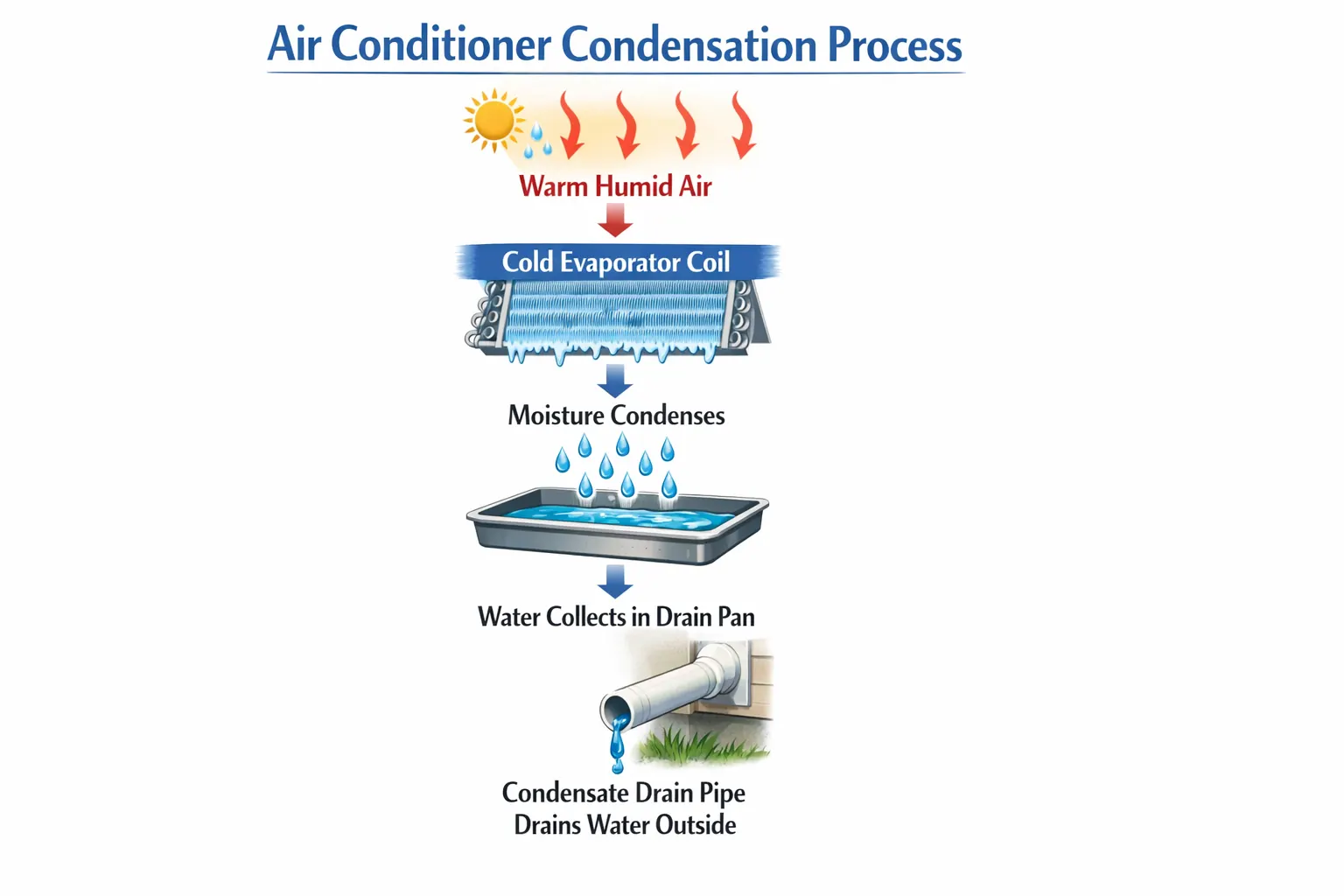 If this drainage system becomes blocked or damaged, the condensation cannot exit the system properly. This leads to water dripping from the aircon indoor unit or leaking inside the house.
Signs Your Air Conditioner Is Leaking Water
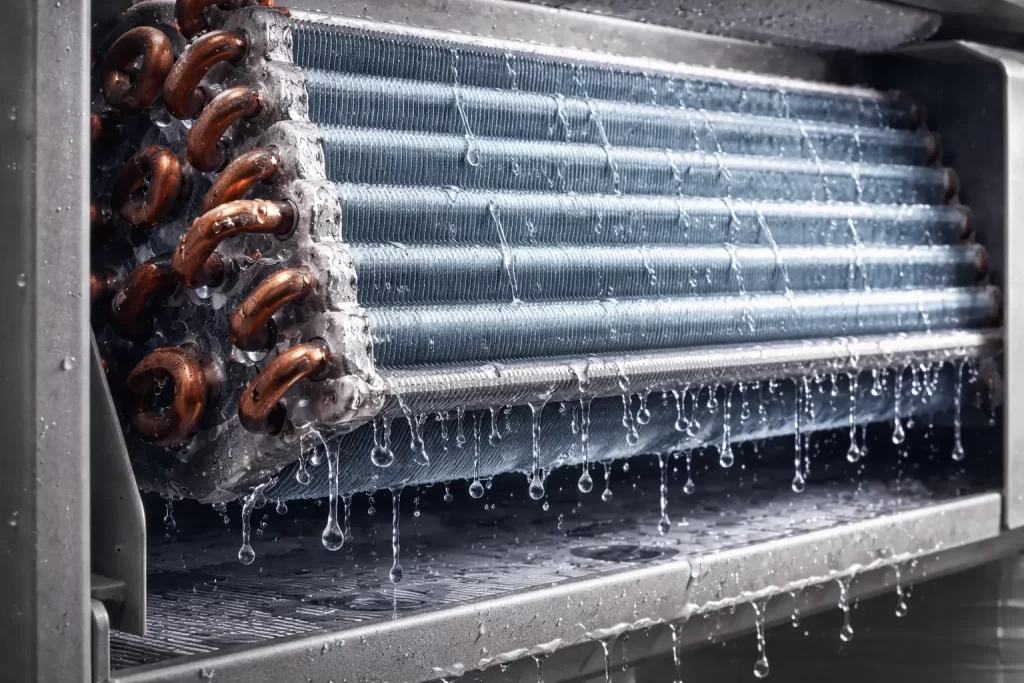
If your aircon is leaking water, you may notice several warning signs.
Common symptoms include:
- Water dripping from the indoor air conditioner
- Water stains on the wall near the AC unit
- Water pooling under the indoor unit
- AC suddenly shutting down
- Reduced cooling performance
- Water dripping from the front of the air conditioner
If you notice aircon leaking water inside house, the issue should be investigated quickly to avoid damage to ceilings, walls or electrical systems.
8 Common Causes of Air Conditioner Water Leaks
1. Blocked Condensate Drain Line
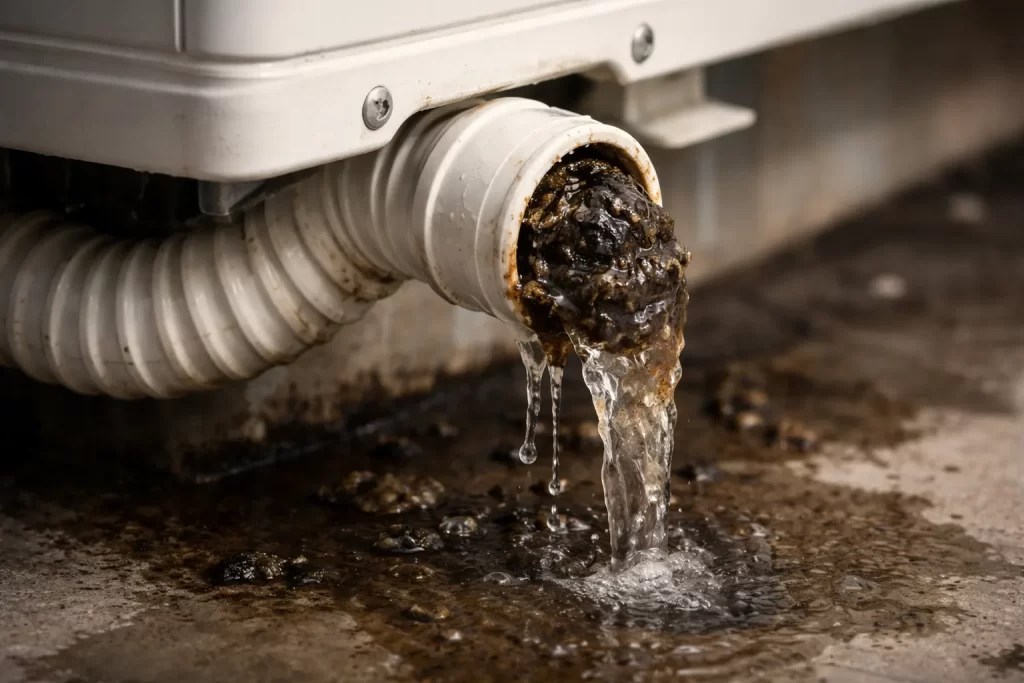
A blocked condensate drain line is one possible cause of water leaking indoors. Samsung’s Australian guidance also identifies drain-hose position and installation issues. An inspection is needed to identify the cause in your system.
Over time, dirt, mould, algae and dust can build up inside the drain pipe. When the pipe becomes clogged, condensation water cannot drain properly.
As a result:
- water backs up inside the drain pan
- the pan overflows
- the air conditioner starts leaking water inside
Professional HVAC technicians typically clear this blockage using vacuum pumps or specialised cleaning tools.
2. Dirty Air Filter
A clogged air filter can restrict airflow inside the air conditioner.
When airflow becomes restricted, the evaporator coil becomes extremely cold and may freeze.
When the ice melts, it creates excess water that may overwhelm the drainage system and cause the air conditioner to drip water.
Replacing or cleaning the filter regularly can prevent this problem.
Cleaning a filter will not clear a blocked condensate pipe, though restricted airflow can contribute to coil icing. The cause of the leak still needs to be checked.
3. Frozen Evaporator Coil
A frozen evaporator coil is another reason an air conditioner leaking water inside occurs.
When airflow is restricted or refrigerant levels drop, the coil temperature may fall below freezing.
Ice forms on the coil and later melts, producing large amounts of water.
If the drain system cannot handle the water volume, it begins leaking.
4. Cracked Drain Pan
Older air conditioners often develop cracks or corrosion in the drain pan.
When the drain pan is damaged, water leaks before reaching the drain pipe.
Age alone does not identify a damaged pan. A technician can check for cracks, corrosion and correct drainage.
5. Faulty Condensate Pump
Some AC systems rely on a condensate pump to move water away from the unit.
If the pump fails, water collects in the drain pan and eventually overflows.
This results in water coming from the air conditioner.
6. Low Refrigerant Levels
Low refrigerant pressure can cause the evaporator coil to become extremely cold.
This leads to ice forming on the coil.
When the ice melts, excess water may leak from the system.
Low refrigerant usually indicates a refrigerant leak that requires professional repair.
7. Improper Air Conditioner Installation
If the air conditioner is not installed correctly, the drainage system may not work properly.
Examples include:
- indoor unit installed at the wrong angle
- poorly connected drain pipe
- incorrect refrigerant levels
These issues can cause aircon leaking water from indoor unit.
8. Disconnected Drain Pipe
Sometimes the condensate drain pipe becomes loose or disconnected.
This allows water to leak before reaching the drainage outlet.
This issue can occur after:
- air conditioner servicing
- renovations
- pipe vibrations over time
How To Fix an Air Conditioner Leaking Water
For an indoor leak, turn the unit off and arrange an inspection. The checks below are limited to safe, user-accessible parts; they are not instructions to dismantle or repair the system yourself.
Step 1 – Turn Off the Air Conditioner
Switch the AC off using a dry, safely accessible control. Do not touch wet electrical equipment or assume that switching the unit off makes exposed wiring safe.
Step 2 – Check the Air Filter
Only access the filter as described in the manufacturer’s owner-maintenance instructions, with the unit switched off. Do not remove other covers or handle wet electrical components.
If dirty:
- wash reusable filters
- replace disposable filters
Step 3 – Inspect the Drain Pan
If the drain pan is not visible without removing covers, leave its inspection to a technician. Do not dismantle the unit to investigate the leak.
A damaged pan may need replacement.
Step 4 – Check the Drain Pipe
From a safe position, look for obvious damage or a kink at an accessible drain outlet. Leave concealed pipework and blockages to a technician.
A technician can check and clear an obstructed drain. Do not push tools into concealed pipework or disconnect components to investigate.
Step 5 – Look for Ice Inside the Unit
If ice is visible on the evaporator coil, turn off the AC and allow it to thaw completely.
If ice or indoor leaking returns, keep the system off and arrange an inspection rather than repeatedly restarting it.
Why Is My Air Conditioner Leaking Water Inside My House?
A blocked condensate drain line is one possible cause of indoor water leaks. When a drain becomes obstructed, water can back up in the pan and overflow. Other faults can produce similar symptoms, so an inspection is needed to identify the cause.
Other causes include dirty filters, frozen evaporator coils, and damaged drain pans.
Window Air Conditioner Leaking Water
Many people also search for “window AC leaking water” or “window unit dripping water inside.”
Window AC units can leak water if they are not installed with the correct tilt angle.
Follow the exact model’s installation instructions for its mounting position and drainage arrangement. Do not apply a universal tilt angle or reposition a secured window unit yourself.
Have an installer check incorrect mounting or persistent indoor leakage; window-unit drainage designs vary.
Other causes include:
- clogged drain holes
- dirty filters
- frozen evaporator coils
How To Prevent Air Conditioner Water Leaks
Appropriate maintenance can reduce some causes of leaks, but it cannot prevent every component or installation fault.
Use the manufacturer’s instructions and the system’s condition to plan maintenance:
| Maintenance task | When and who |
| User-accessible filters | Check and clean or replace as the model manual specifies; heavy use and dust may require more frequent attention. |
| Drain and evaporator coil | Have a technician inspect and clean as needed; do not dismantle the unit or clear concealed drains yourself. |
| Professional servicing | Follow manufacturer and technician advice for your usage and environment. |
| Indoor leak or visible ice | Keep the system off and arrange an inspection rather than waiting for routine maintenance. |
Routine servicing can identify drainage and airflow problems. It does not guarantee that a leak will not recur; the underlying cause must be addressed.
Other Common Air Conditioner Problems
If your system is experiencing issues, you may also encounter these problems:
- Air conditioner blowing hot air
- AC unit freezing up
- Air conditioner sweating inside
- AC not turning on
- Air conditioner making buzzing noise
These issues often share similar causes such as airflow restrictions or electrical faults.
What Affects the Cost of Repairing a Leaking Air Conditioner?
Clearing a blocked drain, replacing a damaged tray or pump, and investigating an iced coil involve different work. Access to the indoor unit and drain, the condition of the equipment and any replacement parts affect the quote. Our Brisbane air conditioning repair cost guide explains the factors to discuss; a confirmed diagnosis is needed for a price specific to your system.
When requesting a repair assessment, include your suburb, brand and model, where the water appears and whether cooling has changed. Photos of the leak location and any error code can help the team prepare. Mention ceiling leaks or water close to electrical fittings when booking.
Brisbane Air Conditioning Experts You Can Trust
If your air conditioner leaking water inside the house continues after basic troubleshooting, it’s best to have the system inspected by experienced professionals.
At Sun City Air, our air conditioning experts in Brisbane diagnose and repair a wide range of AC issues, including:
- clearing blocked condensate drain pipes
- repairing frozen evaporator coils
- replacing faulty condensate pumps
- fixing refrigerant leaks
Identifying the problem early can help prevent more serious damage to ceilings, walls and electrical components.
Frequently Asked Questions
Why is my aircon leaking water?
A blocked drain is one possibility, alongside a damaged pan, pump fault, installation problem or ice melting from a frozen coil. The leak’s cause must be checked rather than assumed from where the water appears.
Why is my air conditioner dripping water?
Dripping water usually indicates a clogged drain pipe, frozen evaporator coil, or dirty air filter restricting airflow.
Is it normal for an air conditioner to drip water outside?
Water from the intended condensate outlet can be normal during cooling. Water leaking from the indoor unit, wall or ceiling is different and needs attention; unusual outdoor leakage may also need inspection.
Can I run my air conditioner if it is leaking water?
Running an air conditioner that is leaking water is not recommended because it may damage electrical components or worsen the problem.
How often should AC drain pipes be cleaned?
Follow the manufacturer’s maintenance guidance and ask your technician about inspection and cleaning for your system’s use and environment. Arrange prompt inspection if drainage is poor or water leaks indoors, regardless of the last service date.
Stop recurring air conditioner leaks
Water leaks often return when the drain, filters or indoor coil are not properly cleaned and checked.
- Professional air conditioner cleaning in Brisbane for blocked drains, mould and dirty indoor coils.
- Air conditioning servicing for performance checks and preventative maintenance.
- AC repairs in Brisbane if the leak is caused by a damaged pump, cracked tray or installation fault.