Why is my AC Unit Sweating Inside?
- Sep 02, 2021
- Buying Guides
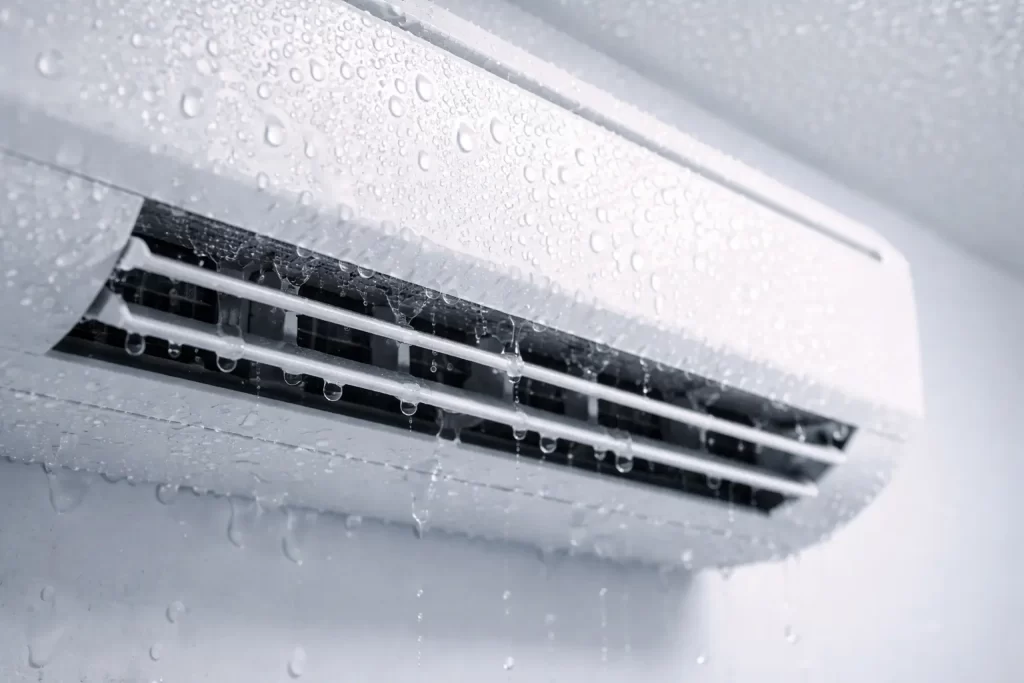
If you’ve noticed water droplets forming on your air conditioner vents, pipes, or indoor unit, you may be experiencing what HVAC technicians commonly call “AC sweating.” While a small amount of condensation can be normal during operation, excessive moisture or water dripping from your air conditioning system can signal a deeper issue.
For homeowners in Brisbane, this problem is particularly common due to the city’s warm temperatures and high humidity levels, especially during summer. When warm humid air meets the cold surfaces of an air conditioning system, condensation forms. However, if this moisture builds up excessively, it can lead to water leaks, mould growth, or even structural damage to ceilings and walls.
Understanding why your AC unit is sweating can help you determine whether the issue is harmless condensation or a warning sign that you need air conditioning servicing or professional AC repairs.
What Does It Mean When an Air Conditioner Is Sweating?
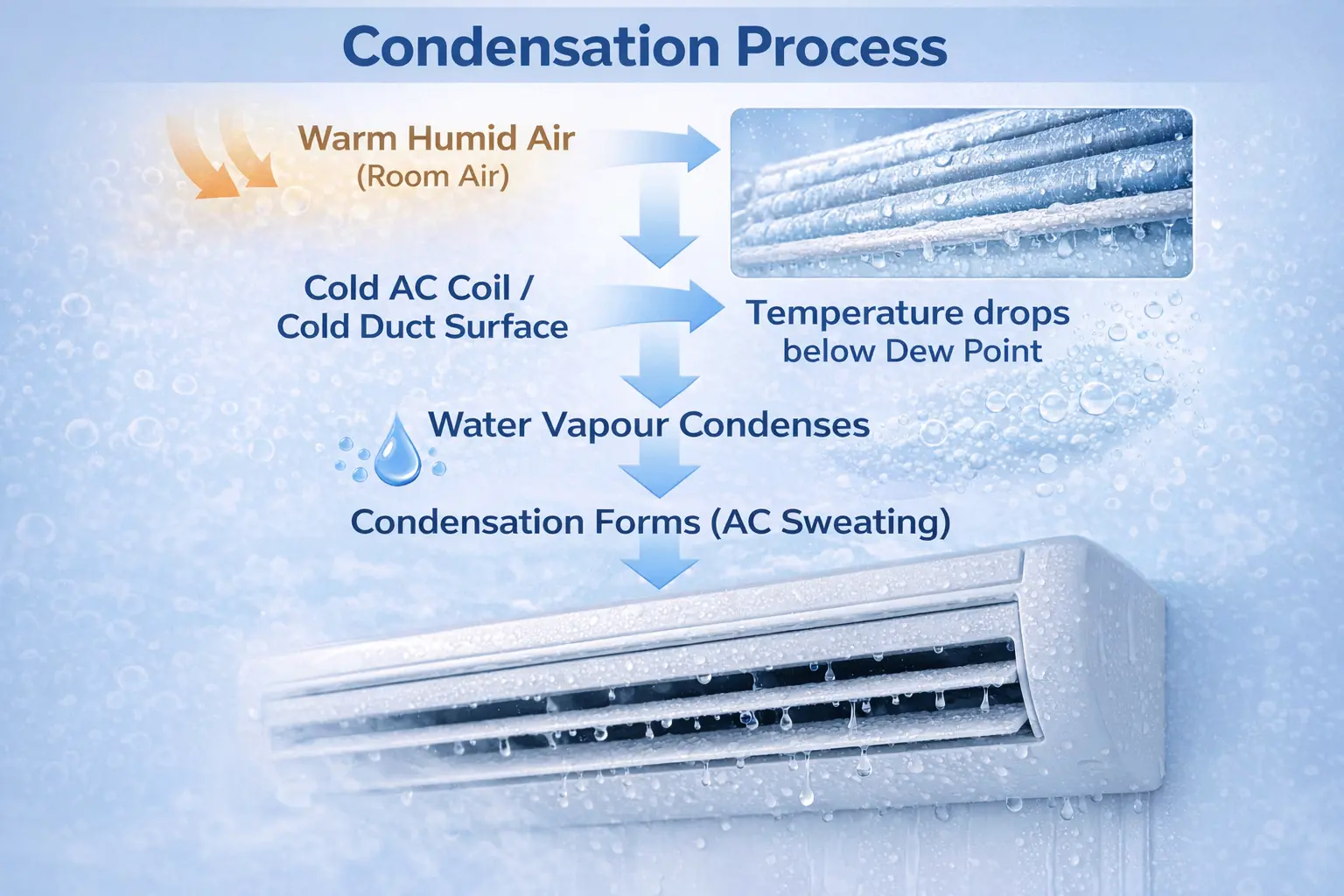 Air conditioner sweating is essentially condensation forming on cold surfaces inside or around your HVAC system. This occurs when humid air comes into contact with components such as:
- Air conditioning ducts
- Refrigerant pipes
- Indoor evaporator coils
- Air vents
When warm air cools rapidly against these surfaces, the moisture in the air condenses into water droplets.
A small amount of condensation is expected when an air conditioner is running. However, large droplets, dripping water, or wet ceilings can indicate problems with airflow, insulation, or drainage.
Why Air Conditioner Sweating Is Common in Brisbane
Brisbane’s subtropical climate creates ideal conditions for condensation problems. During summer, outdoor humidity levels often exceed 70–80%, meaning there is a significant amount of moisture in the air.
When this humid air enters your home and interacts with the cold surfaces of your air conditioner, condensation can occur quickly.
Some common Brisbane-specific factors include:
- High outdoor humidity
- Frequent temperature differences between indoor and outdoor environments
- Poor roof insulation in older homes
- Ducted air conditioning installed in ceiling cavities
Because of these factors, regular air conditioning servicing in Brisbane is essential to keep systems operating efficiently and to prevent condensation issues.
6 Common Reasons Your AC Unit Is Sweating
There are several potential causes of air conditioner sweating. Some are minor maintenance issues, while others may require professional air conditioning repairs.
1. High Indoor Humidity
The most common cause of AC sweating is excess humidity inside your home.
If windows or doors are slightly open, warm outdoor air can enter the room and mix with cool indoor air. This creates condensation when the warm air touches the cold surfaces of the air conditioner.
Signs of humidity problems
- Foggy windows
- Damp air or musty smells
- Moisture forming on vents
Reducing indoor humidity through proper ventilation or dehumidification can help prevent condensation.
2. Dirty Air Filters Restricting Airflow
Air filters are responsible for keeping dust and debris out of your HVAC system. When filters become clogged, airflow through the system is reduced.
Restricted airflow causes the evaporator coil temperature to drop too low, which can lead to condensation forming on ducts and vents.
Regular air conditioner servicing includes cleaning or replacing air filters to maintain proper airflow.
3. Poor Duct Insulation
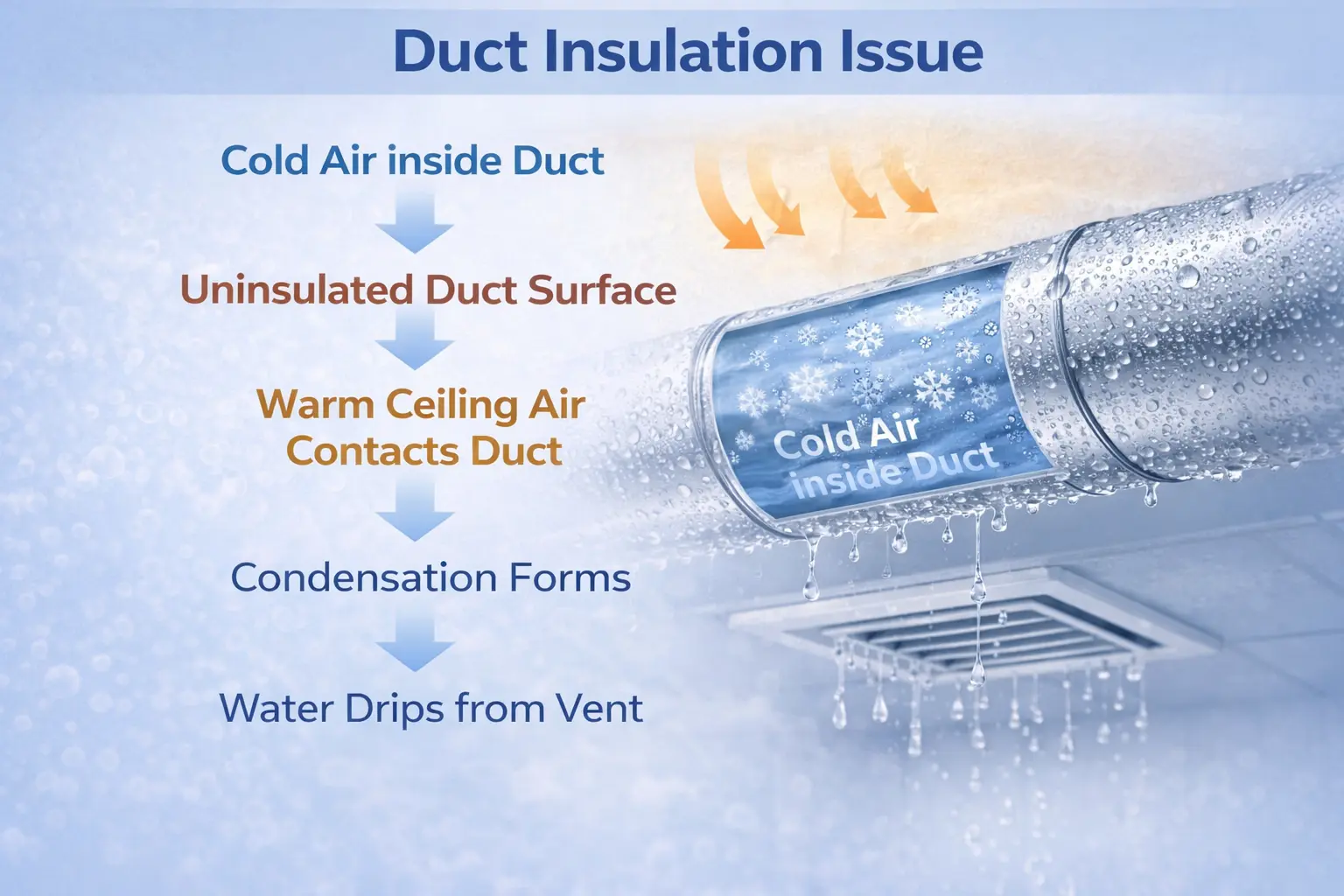 Ductwork running through roof cavities or ceiling spaces must be properly insulated. Without adequate insulation, the cold air inside the ducts meets warm air surrounding the duct.
This temperature difference can cause condensation on the outside of the duct.
In many Brisbane homes, upgrading duct insulation can significantly reduce condensation problems.
4. Clogged Condensation Drain Line
Air conditioners naturally produce condensation as part of their cooling process. This moisture is collected in a drip tray and removed through a condensation drain line.
If the drain line becomes blocked with dirt, debris, or mould, water cannot escape the system.
Instead, it builds up and may leak from vents or ceiling spaces.
Warning signs of a clogged drain line
- Water dripping from ceiling vents
- Damp patches on ceilings
- AC unit leaking water indoors
This issue usually requires professional AC repairs to clear the drainage system.
5. Incorrect Temperature Settings
Setting your air conditioner to extremely low temperatures can cause condensation problems.
When the temperature inside the system drops below the dew point, moisture forms rapidly.
For most homes in Brisbane, Australia a comfortable and efficient setting is between 23°C and 25°C.
Running the system at excessively low temperatures can lead to unnecessary condensation and higher electricity bills.
6. Frozen Evaporator Coils
Frozen coils are another potential cause of AC sweating. When airflow is restricted or refrigerant levels are incorrect, ice can form on the evaporator coil.
When the ice melts, water may drip from the system or ducts.
Causes of frozen coils
- Dirty air filters
- Low refrigerant levels
- Blocked airflow
- Faulty blower fan
Frozen coils should be inspected by professionals providing air conditioning repairs to avoid further system damage.
When AC Sweating Becomes a Serious Problem
Although condensation is normal, excessive sweating should not be ignored.
Persistent moisture around an air conditioner can lead to:
- Ceiling damage
- Water stains
- Mould growth
- Electrical hazards
- Structural issues in roof cavities
In severe cases, excessive water buildup can even weaken ceiling structures.
If you notice continuous dripping or damp ceilings near vents, it’s best to schedule air conditioning servicing or repairs immediately.
How Professional AC Repairs Fix Condensation Problems
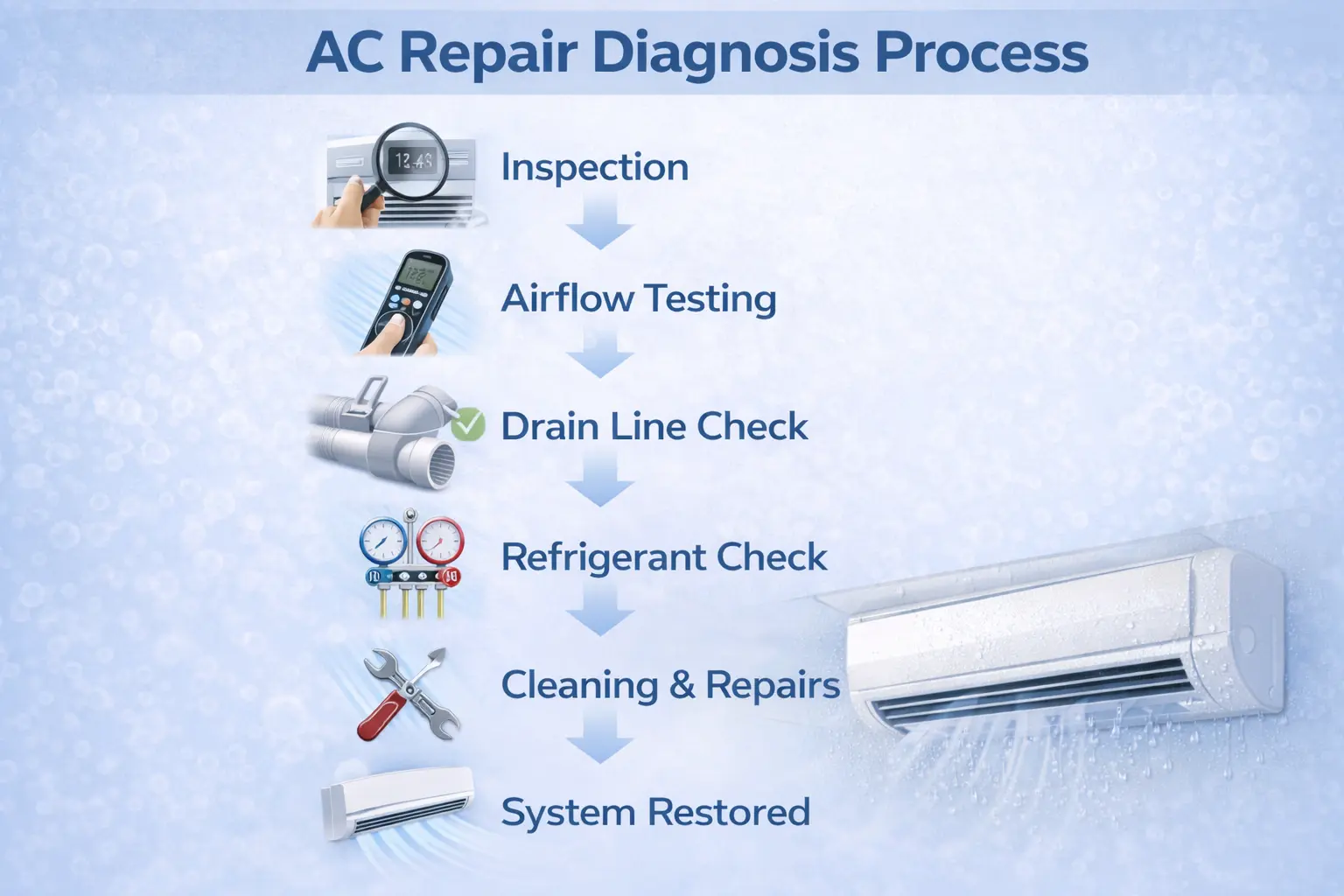 When an HVAC technician inspects a sweating air conditioner, they will perform a series of diagnostic tests to identify the underlying problem.
A typical air conditioning repair service may include:
System inspection
Technicians inspect the entire HVAC system, including ducts, filters, coils, and refrigerant levels.
Cleaning components
Dirty filters, coils, and drainage lines are cleaned to restore airflow.
Checking refrigerant levels
Low refrigerant can cause cooling issues and coil freezing.
Testing airflow
Technicians measure airflow to ensure the system is operating efficiently.
Drainage system repairs
Blocked condensation lines are cleared to prevent water buildup.
These steps restore the system to normal operation and prevent further moisture problems.
Preventing AC Sweating in the Future
Preventative maintenance is the best way to avoid condensation problems.
Homeowners can reduce the risk of AC sweating by following these simple steps:
Schedule regular servicing
Professional air conditioner servicing helps detect small issues before they become costly repairs.
Replace air filters regularly
Clean filters maintain proper airflow and system efficiency.
Maintain proper temperature settings
Avoid setting your thermostat too low.
Ensure proper insulation
Well-insulated ducts reduce temperature differences that cause condensation.
Keep vents and ducts clean
Blocked airflow can lead to coil freezing and moisture problems.
By maintaining your system properly, you can avoid unexpected breakdowns and expensive repairs.
Other Common Air Conditioner Problems
AC sweating is just one of many issues that can affect cooling systems.
Other common problems include:
- Air conditioner leaking water
- AC unit frozen or icing up
- Air conditioner blowing warm air
- Air conditioner making buzzing noises
- Ducted air conditioning not cooling all rooms
- Air conditioner turning on and off frequently
Many of these issues share similar causes, including airflow restrictions, electrical faults, or refrigerant problems.
If your system is showing any of these symptoms, it may require professional air conditioning repairs.
Get Professional Air Conditioning Repairs in Brisbane
If your air conditioner is sweating excessively, leaking water, or showing other signs of malfunction, it’s important to address the problem early.
Delaying repairs can lead to:
- Higher electricity costs
- Reduced cooling efficiency
- Structural damage from water leaks
- Complete system failure
Our experienced technicians provide air conditioning repairs in Brisbane, diagnosing issues quickly and restoring your system to optimal performance.
Whether the problem involves blocked drain lines, airflow restrictions, or insulation issues, professional repairs can prevent small problems from becoming expensive replacements.
Final Thoughts
Air conditioner sweating is often a sign that your system is dealing with excess humidity, restricted airflow, or drainage issues. While minor condensation is normal, persistent moisture should not be ignored.
By understanding the causes of AC sweating and scheduling regular air conditioning servicing, homeowners in Brisbane can keep their cooling systems operating efficiently and avoid costly repairs.
If you notice unusual moisture around your air conditioning unit, addressing the issue early can save you time, money, and potential structural damage in the long run.
Frequently Asked Questions
Is it normal for an air conditioner to sweat?
Yes, small amounts of condensation can occur when an air conditioner is running, especially in humid environments like Brisbane. However, excessive sweating or dripping water may indicate a maintenance issue that requires professional inspection.
Why is my AC dripping water from the ceiling?
Water dripping from ceiling vents often indicates a blocked drain line, frozen evaporator coil, or excessive condensation in ductwork. This situation should be inspected by technicians providing air conditioning repairs.
Can high humidity cause AC sweating?
Yes. High humidity levels increase the amount of moisture in the air. When this humid air touches the cold surfaces of an air conditioner, condensation forms.
How often should I service my air conditioner?
Most HVAC professionals recommend air conditioning servicing at least once per year to maintain system efficiency and prevent problems like condensation or airflow issues.
When should I call a technician for AC repairs?
If your air conditioner is dripping water, producing unusual noises, or failing to cool your home effectively, it’s best to contact professionals for AC repairs before the issue worsens.