Avoiding Sudden Spikes In Electricity Bills Due To Air Conditioning Faults in Brisbane
- Mar 14, 2025
- Blogs
As average temperatures rise, and episodes of extreme heat increase – the average electricity cost attributable to Air Conditioners is on the rise. The average increase in electricity consumption by Air Conditioners can be explained by:
- the higher average temperatures mean our Summer cooling season is extended – meaning there are more days when we run our Air Conditioners; and
- the increase in extreme / high temperatures mean that when our Air Conditioners are running they are working under higher load- consuming more energy.
However there are a number of things you can do to reduce / manage your air conditioner related electricity bill which we will set out below – this will help to avoid sudden spike in electricity bill due to air conditioning.
What are the most common causes of high AC related energy bills?
Some of the causes of High AC related energy cost we will set out below can be resolved by the user, some can be fixed by a technician and some (which you may or may not deem economic to pursue) will involve AC upgrades / replacements.
Setting the thermostat / controller too low
The single biggest determinant of how hard your air conditioner works in the Summer is how low you set the thermostat (controllers) set point. The set point is the temperature which the Air Conditioner is trying to achieve – and once this temperature has been achieved the unit reduces cooling / stops altogether – until the temperature rises above the set point.
Our tip: set your thermostat / controller to 24 degrees Celsius. This is a widely researched temperature at which most humans are comfortable. You of course may have your set point lower – but the lower it is set, the longer and harder your air conditioner will work, and the you will see higher energy use and higher power bills.
Ignoring seasonal maintenance
A leading cause of high energy consumption and a high electricity bill from air conditioners is poor maintenance. Some examples of poor maintenance that leads to high electric bills are:
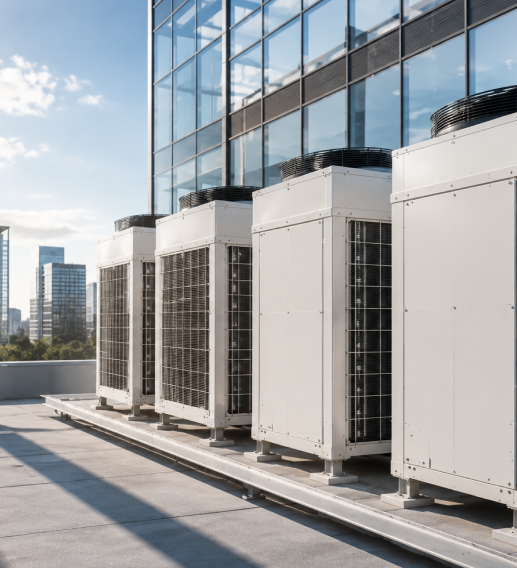
- blocked / dirty condenser coil (outdoor unit) – these can become blocked with dust, dirt and vegetation. A blocked coil will significantly reduce the amount of heat transfer that occurs due to reduced airflow. This means your air con will work harder and longer to achieve it set point. In extreme cases the unit will never stop running or may have a pressure fault and stop working.
- blocked / dirty evaporator coil (indoor unit) – these can become blocked in the same way as your outdoor coil and lead to reduced heat transfer due to poor airflow.
Our tip: have your air conditioner serviced regularly and at a minimum at the start of every summer and the service technician will identify and resolve any air flow issues with your air conditioner.
Leaking ductwork
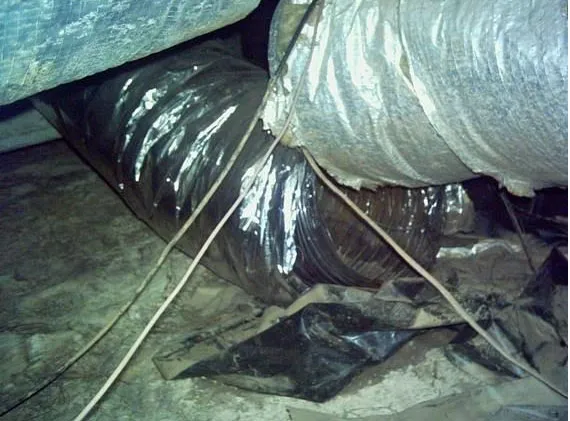
Ducted Air Conditioners, have duct (flexible or rigid) connecting the indoor unit to the supply air outlets (the vents in the ceiling out of which the cool air flows). This ducting can have leaks – due to either poor installation or deterioration or damage over time.
There have been many cases where our technicians have put their head into a ceiling cavity – only to find that it was cooler than the house below – as most of the cold air from the air conditioner was spilling into the ceiling cavity due to duct leaks and not out of the supply air grilles.
Our tip: have your air conditioner serviced regularly and at a minimum at the start of every summer and the service technician will identify and resolve any leaky duct work.
Read more: what to do if your air conditioner is leaking water
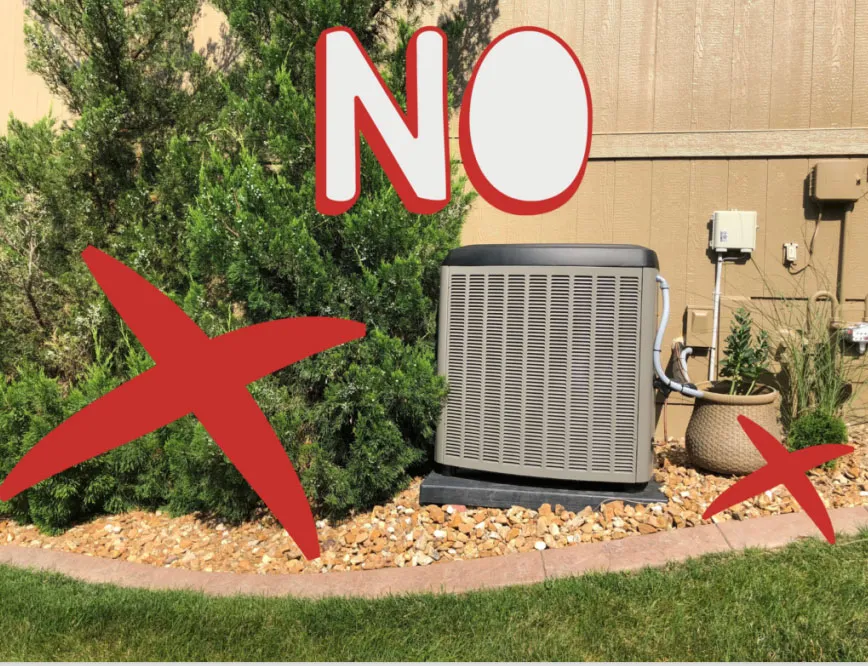
Blocking the outdoor unit
Your air conditioner relies on the free flow of air to cool the outdoor unit.
If vegetation grows around the outdoor unit or you inadvertently block / reduce the air flow around your outdoor unit you will have reduced airflow and reduced heat transfer – this will lead to your ac unit running longer and higher costs.
Our tip: make sure there is free air flow around all sides of your outdoor unit
Running an older, less efficient air conditioning unit
Newer air conditioners are more efficient than older systems for two reasons:
- New system are designed to be more efficient
- Old systems become less efficient they older they are – this is due to reduced operating efficiency of the compressor and coils.
Our tip: rather than spending money on failing parts / expensive repairs consider upgrading to a newer more energy efficient ac appliance.
Not using ceiling fans to support cooling
Ceiling fans are a low cost way to get more cooling benefit from your air conditioning and save money. They do this in two ways:
- The fan will distribute cold air more effectively throughout the room you are cooling.
- The movement of air by itself will make you feel cooler.
Our tip: whenever you are running your air conditioner have your ceiling fans on.
Running the air conditioner when the house is empty or in rooms not in use
There is no need to run your air conditioner when you are out of the house or in rooms that are not in use. You should shut the door to rooms that are not in use and turn the air conditioner off in those rooms – that will save energy.
Our tip: only run your air conditioner when you are at home or in rooms you are using to start saving money.
Poor insulation & weatherproofing in your home
The amount of heat transferred from your ceiling space into your homes is one of the key factors driving how much cooling you need to do and hence your electric bills.
The best way to reduce the heat load is to stop the heat entering your house in the first place. The easiest way to achieve this is to insulate and ventilate (preferably through a powered heat extractor) your roof space.
Our tip: ensure your roof space is insulated as a way to reduce the energy consumed by your air con.
Our tips to maximise AC efficiency during summers
Our top tips avoid high electric bills from your air conditioner:
- Raise your set point by a degree or two – 24 degrees is a good place to start
- Make sure your filters are clean
- Make sure your fan wheel is clean
- Make sure your outdoor is free from obstruction and air can flow freely around it
How often should air conditioners be serviced?
The main way you can avoid bill shock from your air conditioner’s high electric bills is to have it running at peak efficiency. The easiest way to do that is to have it regularly serviced. By regular we mean at least annually and more frequently if you use your air con a lot. The more efficient your ac is the lower your power bills will be.
Learn more: Get more details on how a regular service of your air conditioner can help.
Is it worth replacing an air conditioner to save on energy costs?
High electric bills is one reason you might start to think about replacing your air conditioner.
We would not normally advise a customer to replace a functioning air conditioner with a new one on the grounds of energy efficiency -as the efficiency gains alone would not justify the spend. However we do encourage customers to take efficiency improvements into account when making a choice between repairing or replacing (especially an older system) as there will be an improvement in your power bill with a new AC.
Still seeing high electricity bills? Get a free quote on air conditioning repairs in Brisbane
If your air conditioner isn’t working properly and your energy bills are climbing, it may be working harder than it should. Contact our expert repair technicians to restore its efficiency and keep your costs down. Get a free quote on AC repairs in Brisbane.
Learn more about common issues people have with air conditioners
Struggling to pinpoint why your air conditioner isn’t performing like it used to? Several factors could be at play, and based on our experience, these are the most common issues:
- Air conditioner unit is frozen or icing up
- Air conditioner unit is leaking water
- Air conditioner heat mode is not working
- Air conditioner isn’t turning on
- Air conditioner is making loud buzzing noises
- Ducted air conditioner isn’t working in all rooms
- Air conditioner smells
- Air conditioner is sweating inside
- Air conditioner is blowing hot air
- Air conditioner keeps turning off
What are most air conditioner breakdowns caused by?
Air conditioners can fail for various reasons, but most issues come down to a few common culprits. From clogged air filters and refrigerant leaks to electrical faults, these problems can impact efficiency or lead to a complete breakdown. Here are some of the most frequent causes of AC failures.
- AC breakdown caused by electrical problems
- PCB faults
- Faulty air conditioner compressor that needs replacing
- Faulty air conditioner capacitor that needs replacing
- Faulty air conditioner condenser that needs replacing
- Faulty air conditioner evaporator coil that needs replacing
- Air conditioner pipe insulation that needs replacing
There are many more reasons your air conditioner may not be working, and our first step with any repair job is to diagnose the issue with an initial inspection.